
Vintage Bentley
Production NOS.
Where To Look For
Chassis & Engine NOS.
Bentley Specials & Special Bentleys
Unidentified
Bentleys

1929 Bentley 4½ Litre 2-seater
Chassis No. UK3285
Engine No. UK3288
Registration No. No info
2012
Click on thumbnail for larger view
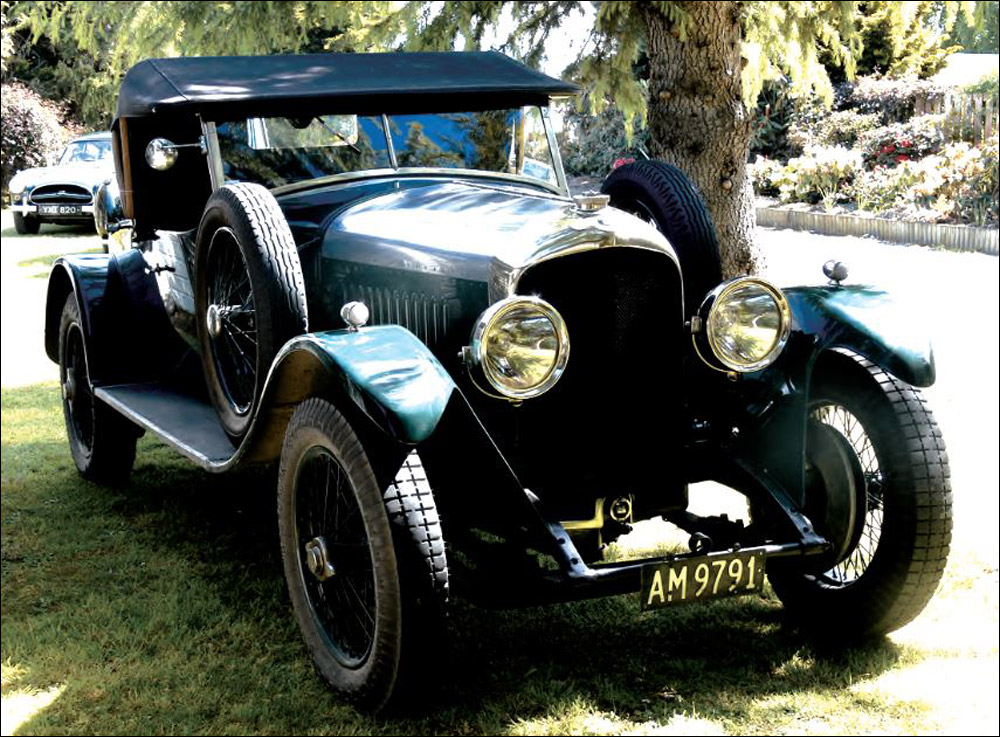
Source: New Zealand Rolls-Royce & Bentley Club, Newsletter 13-2
Posted: May 11, 2013

2009
Loss of oil pressure must surely rank among the most heart stopping feelings of any vintage car owner, especially the vintage Bentley.
The Wright family's 1929 "WO" (Chassis no. UK3285) suffered just that whilst motoring to a "boys" winter lunch.
Having been involved with the rebuild of the top end of the engine some 35 years ago along with my father and a few of his vintage enthusiasts namely Pat Keating, Bob Beardsley and the late Dave Bowman I was somewhat excited that here was an opportunity to delve into how and why such a refined old world racer really ticked.
After contacting another very experienced owner (Geoff Owen) the advice was to check the oil filter for particles of white metal, tell tale signs of main bearing collapse. I had a sudden rush of blood and a dose of whispering "no, no, no, I hope not" to myself.
Sadly there was enough white metal in the filter to make a brand new ingot.
It was no, no, no but yes this is my time to rebuild the engine of our "WO"
The car was delivered to my close friend Graham Gibson's garage, South Terrace Motors at Darfield.
The fact that the local bakery is near by was a secondary reason for locating here but I can assure you that the combination of freshly cooked pies and cream buns together with the WO oil and Graham's enthusiastic staff was just the appropriate medication that got me through the mind numbing issues of a much worn engine.
A cracked crankshaft, scored bore as well as all the big end and main bearings well past their used by date. Oil, water, grease, pies and cream buns — I was like a pig in mud.
After a session on the internet costing out new overseas parts to rebuild the engine I decided that, as others have done to rebuild using local talent.
Having gathered the parts and a sad looking car I returned home to a wife, sons and a mother who all thought the end is nigh. I must say the thought that the "Bentley Boys" are watching as to how this bush mechanic was going to handle a WO rebuild was never far from my mind and to that effect I made a resolution that time was not important and the attention to detail would be the success of the project. All other such interests would have to take second place.
After seeking further advice from Geoff and Russell Hayes (Motor Reconditioners) and Allan Wyllie (Auto Restorations) the crankshaft was cut and a new flange welded on.
Russell also fitted new sleeves, pistons and rings. Allan reset the end float of all the main shafts.
Back in the 60's my father had problems with the skew gears that drive the magnetos and water pump. It was thought at the time that the loading on these gears caused them to strip and so they removed and adapted another water pump driven by the front pulley instead of the fan. Having no fan over heating on trips into built up areas and on hill climbs was always an issue. Upon stripping down the gears it became apparent that the magneto drive shaft was out of centre thus causing excessive wear.
This may have been the problem that required the alteration back in 1960.
After turning upside down the whole farm yard the elusive water pump and fan were recovered. The dog has a new kennel and the scrap metal pile under the trees has a new position — one meter further along from its last resting place. This episode reminded me of days gone by and how all these various metallic items played a significant role in our farming operation.
Having overhauled the water pump and thermostat then thoroughly cleaning, polishing and painting the engine it was at last ready to assemble. This is where I probably have just enough mechanical knowledge to get into deep trouble.
At this time ex J I Case mechanic and engineer David Penrose was to sell the farm a new bale feeder of which he is the manufacturer. Just the man I needed, although he was probably unaware as to the conditions of sale but it also included the assembly of one Bentley engine and after a tipple or two he caught the vintage bug. His finger tips are probably still sporting a few blisters of holding in the piston rings as the block was lowered onto them and then onto the crankcase. Such an operation requires an 80% mixture of professionalism and guts then a blend of 10% stable bank managing and 5% lubricant and the other 5% to the son turning up at the critical moment. Job done, the engine was ready for ignition having cleaned and checked the manifolds and overhead gear.
It has been 12 months since the famous Bentley burble had aroused ones adrenalin, the large brass starter button was to be again forced forward to the engaging noise of starting the WO. All the issues of water leaks, oil leaks and poor idling plagued us for a few days then gradually the completed old racer emerged from the recovery room to the bright sunshine of a spring morning. Out on highway 73, was one tuned and balanced WO, burbling to the delight of two mechanical enthusiasts driving to a vintage car swap meet at McLean's Island. There in all its glory was the old racer back to its original mechanical state as it was in 1929 with two very experienced ears listening to the engine that all the affection was poured into. Both Geoff Owen and wonderful friend Pat Keating gave their seal of approval. That was the catalyst for David and I to open up and exercise the 4½ litres returning to the shed with the odd swap meet part in hand to enjoy some of the very refined products of Scotland adding to what we believe as a small dot to the history of the fastest trucks of old England.
Source: Donald Wright
Posted: Jan 1, 0001
1964
Click on thumbnail for larger view
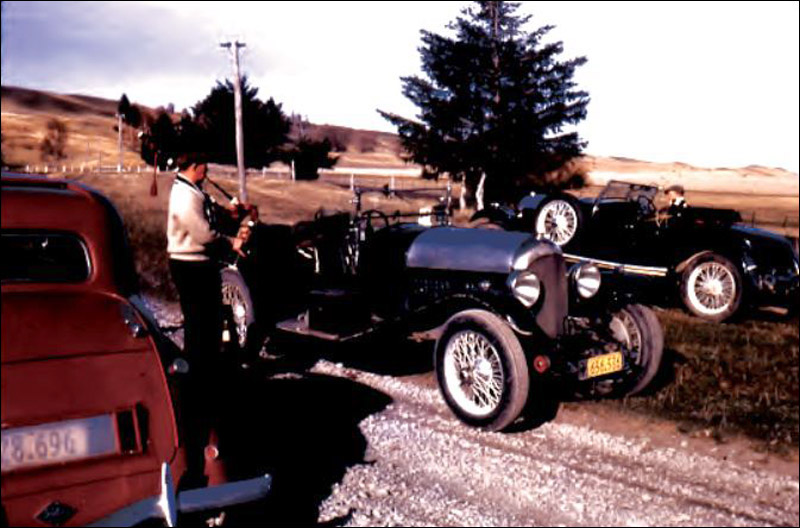
Bob Beardsley is seated in George Wright's 4½ litre, chassis UK3285, showing signs of damage it received the evening before. (Gavin Bain is seen with his bagpipes with his recently acquired 3 litre, Chassis 728 at Pukaki Station on the 1964 Irishman Creek Rally.)
Source: New Zealand Rolls-Royce & Bentley Club, Newsletter 13-2
Posted: May 11, 2013
1960
Click on thumbnail for larger view
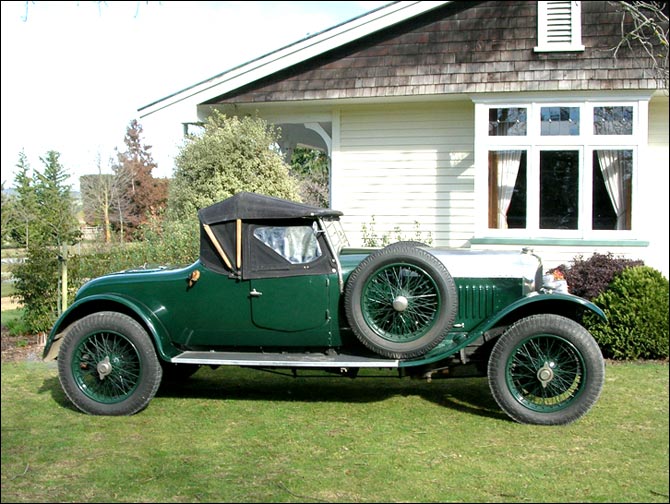
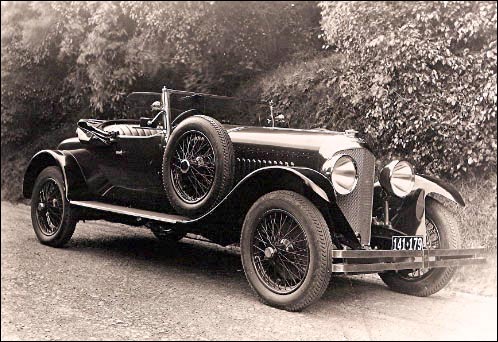
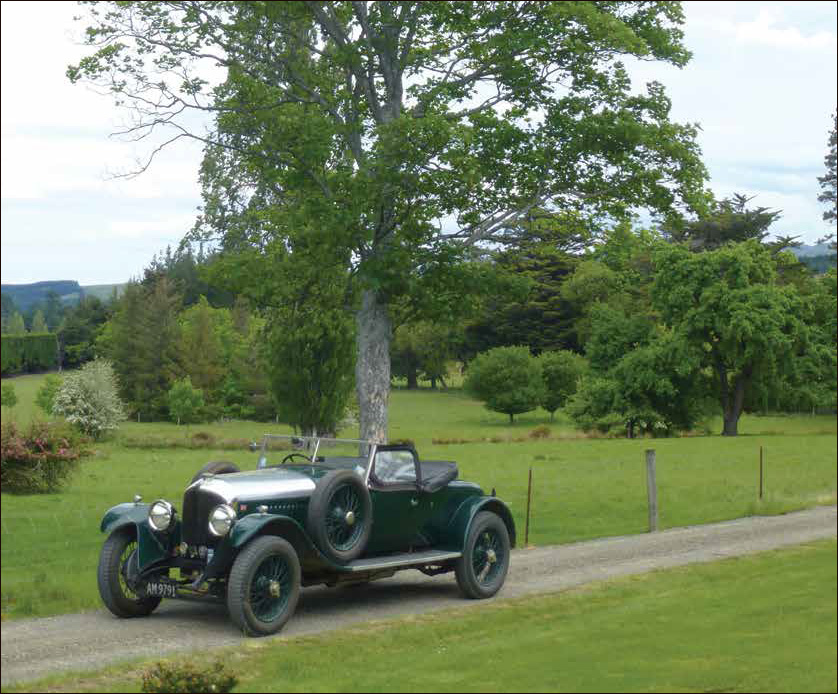
The body is an original roadster with rumble seat.
The car is used frequently in vintage events within NZ.
Source: Donald Wright (Wright family ownership)
Posted: Jan 11, 2008
Click on thumbnail for larger view
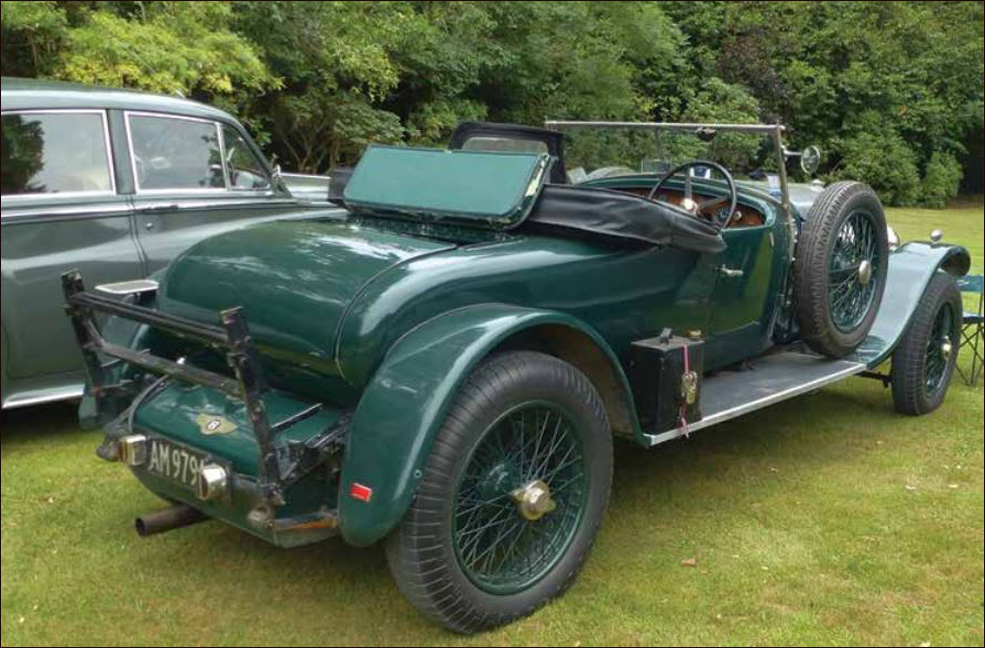
Source: New Zealand Rolls-Royce & Bentley Club Inc, Newsletter Issue 17-2 2017
Posted: Jul 17, 2018
Click on thumbnail for larger view
Source: Donald Wright
Posted: Mar 24, 2008
Click on thumbnail for larger view
Source: New Zealand Rolls-Royce & Bentley Club Inc, Newsletter Issue 17-1 2017
Posted: Jul 17, 2018
Earliest Record Of Historical Facts & Information
| Chassis No. | UK3285 |
|---|---|
| Engine No. | UK3288 |
| Registration No. | No info |
| Date of Delivery: | 30 Nov 1928 |
| Type of Body: | 2-seater |
| Coachbuilder: | Vanden Plas |
| Type of Car: | No info |
| First Owner: | W.R. Hudson |
| More Info: | Michael Hay, in his book Bentley: The Vintage Years, 1997, states: "Vanden Plas body no. 1528?? In NZ." |
Mar 1, 2007