
Vintage Bentley
Production NOS.
Where To Look For
Chassis & Engine NOS.
Bentley Specials & Special Bentleys
Unidentified
Bentleys

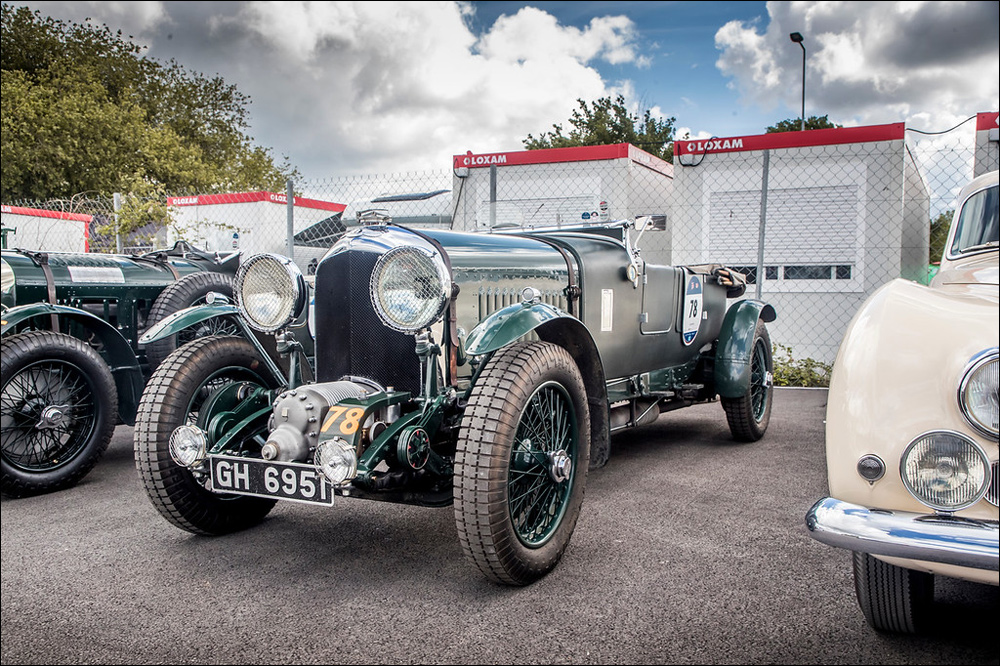
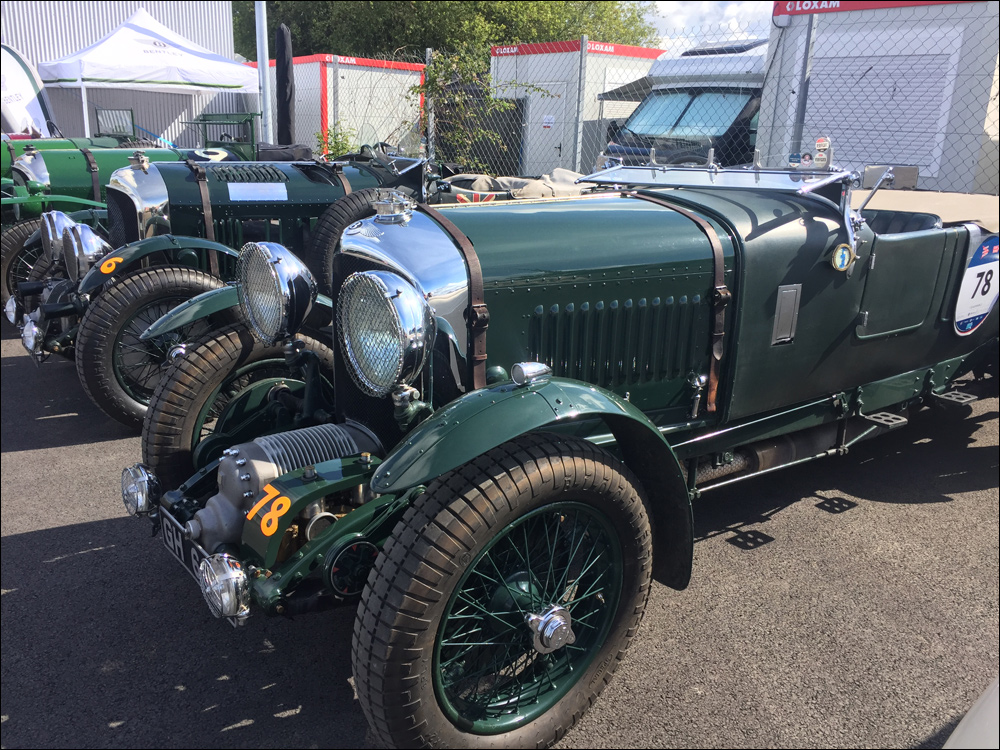
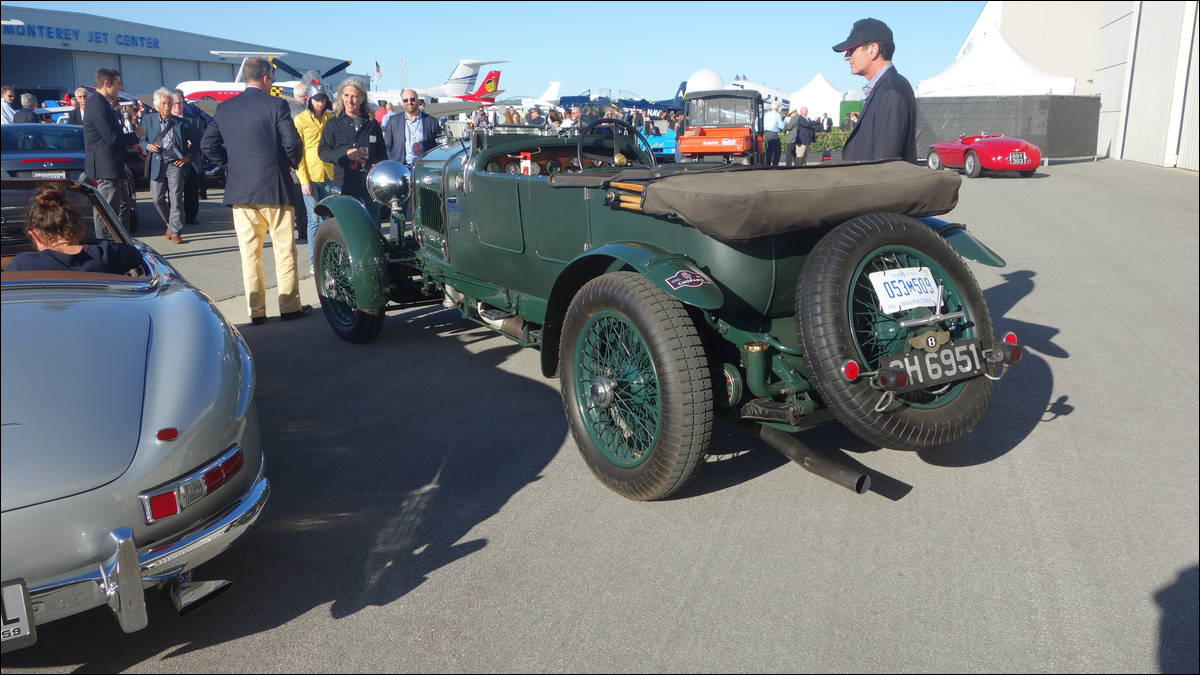
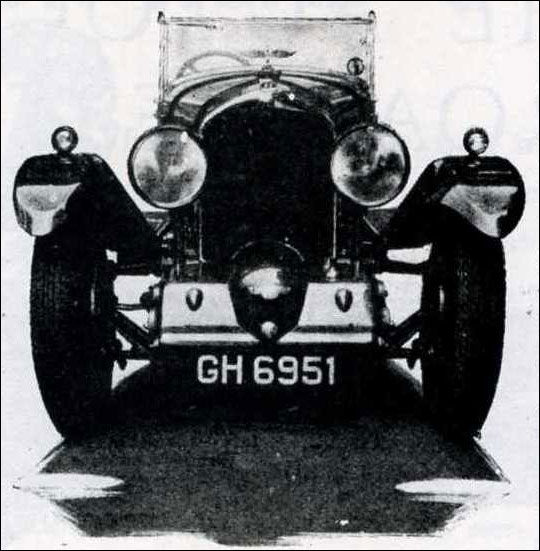
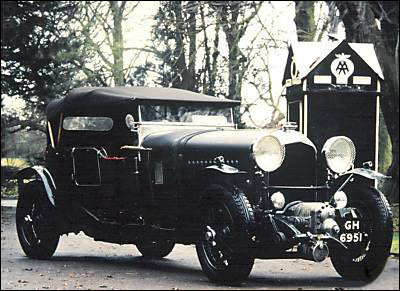
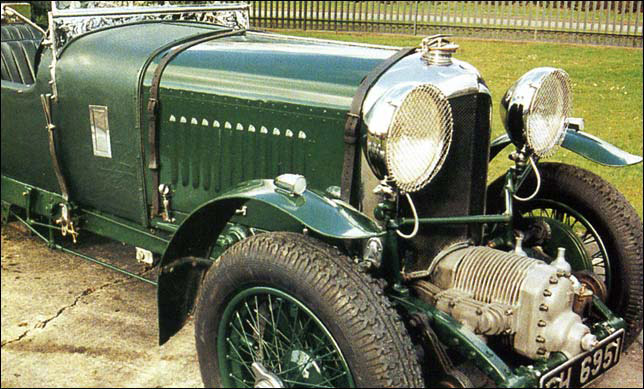
1931 Bentley 4½ Litre Supercharged 119 4-seater
Chassis No. SM3917
Engine No. MS3933
Registration No. GH 6951
May 31, 2019
Click on thumbnail for larger view


Source: Adrian Stevens
Posted: Jun 20, 2019

July 31, 2015
Click on thumbnail for larger view

Source: AutoWeek
Posted: Aug 17, 2015
April 30, 2015
Click on thumbnail for larger view
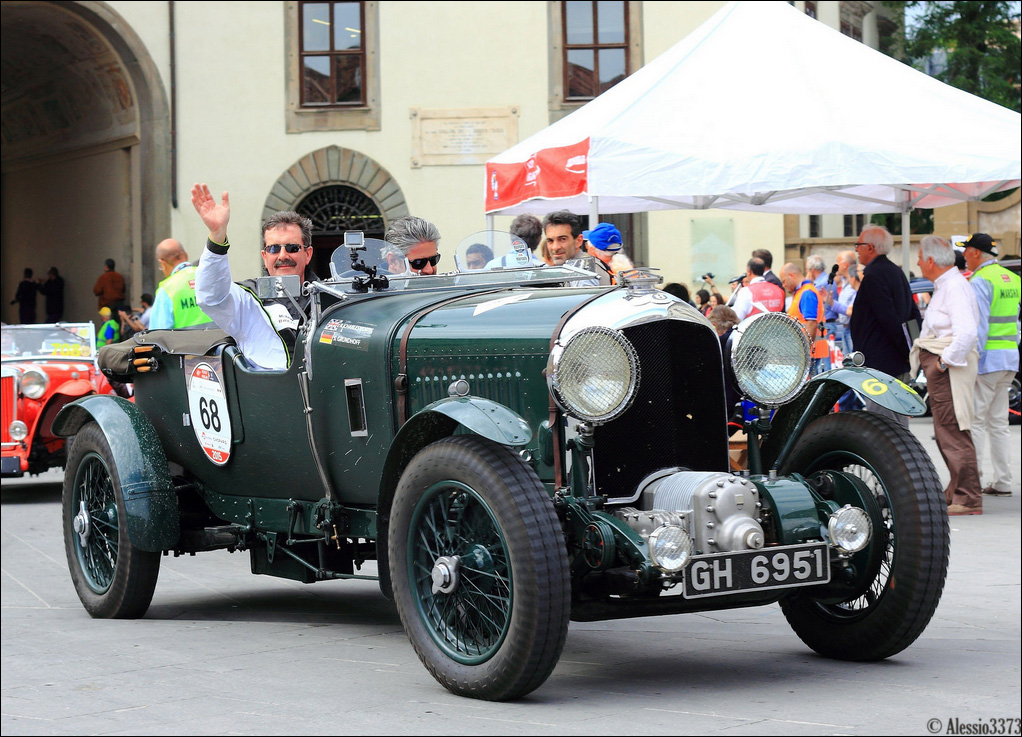
1930 Bentley 4½ Litre Supercharged
Charlesworth Richard - Grundhoff Stefan
Source: Flickr, posted by user 'Alessio'
Posted: May 27, 2015
April 30, 2015
Click on thumbnail for larger view


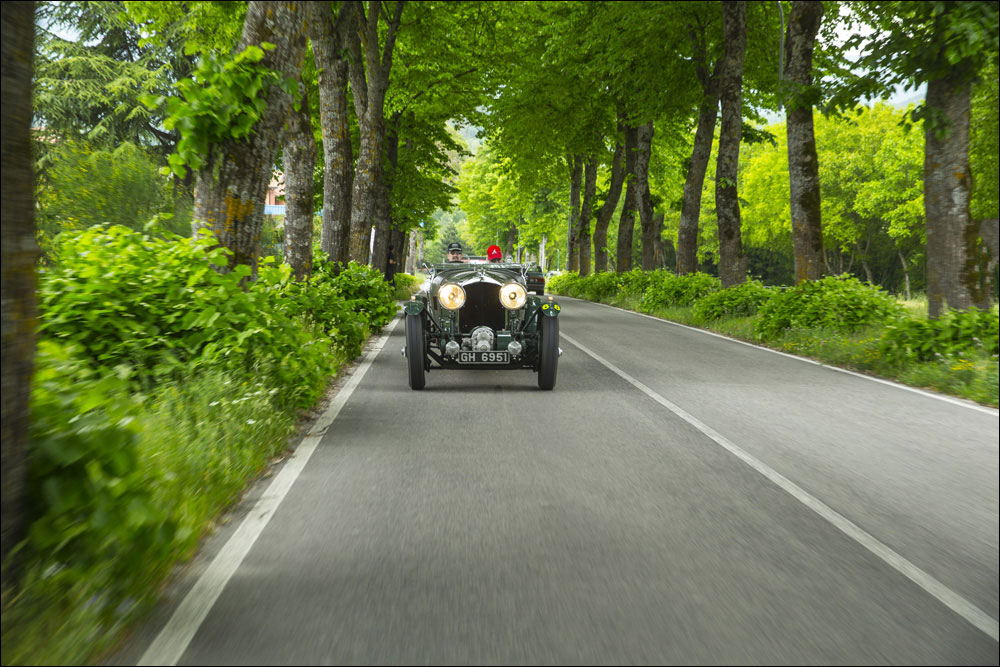

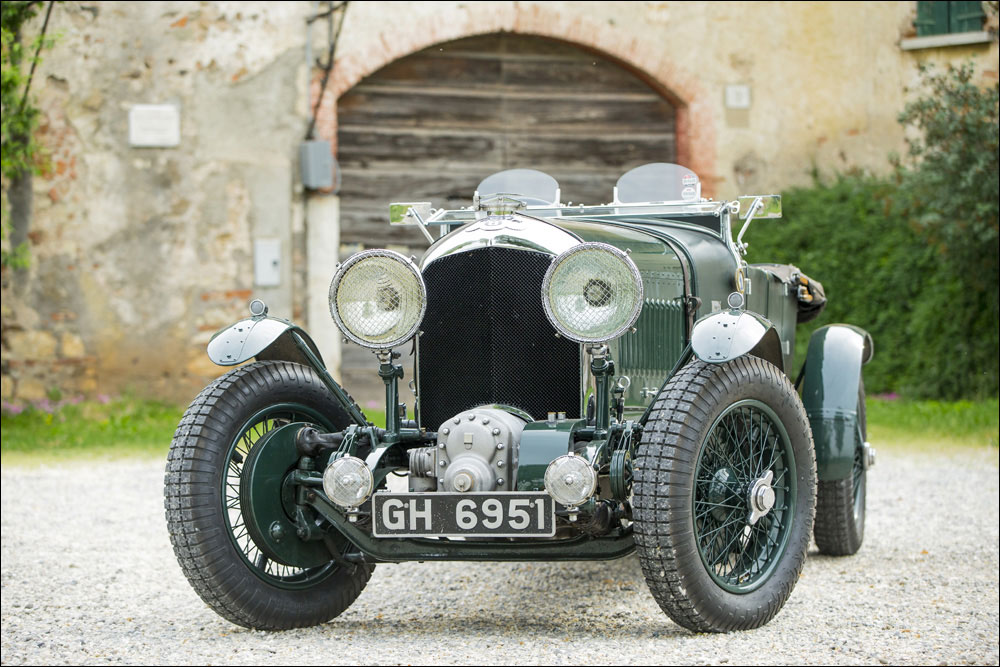

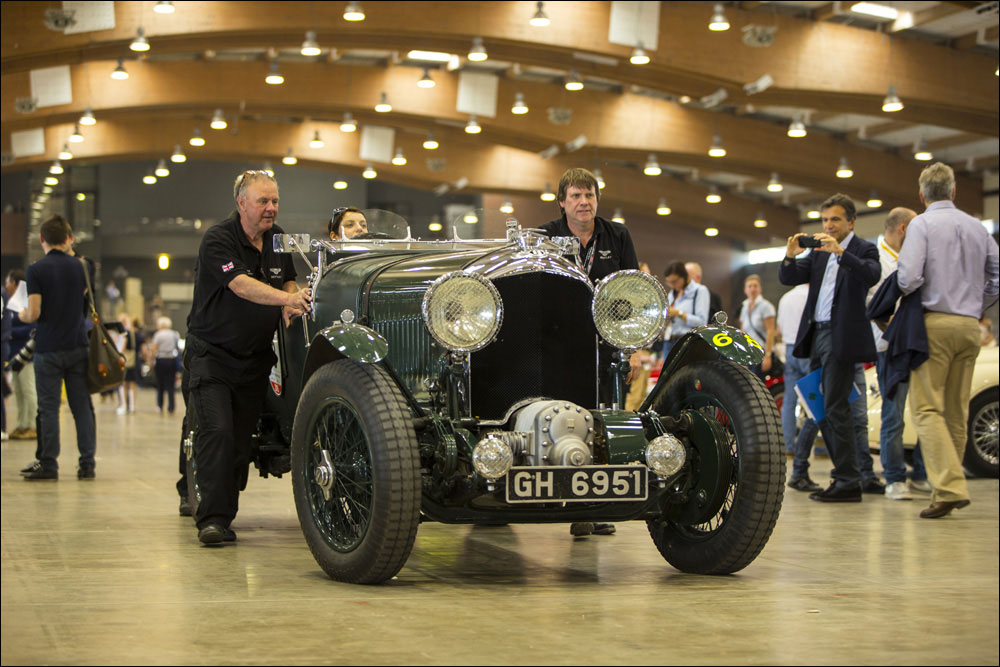
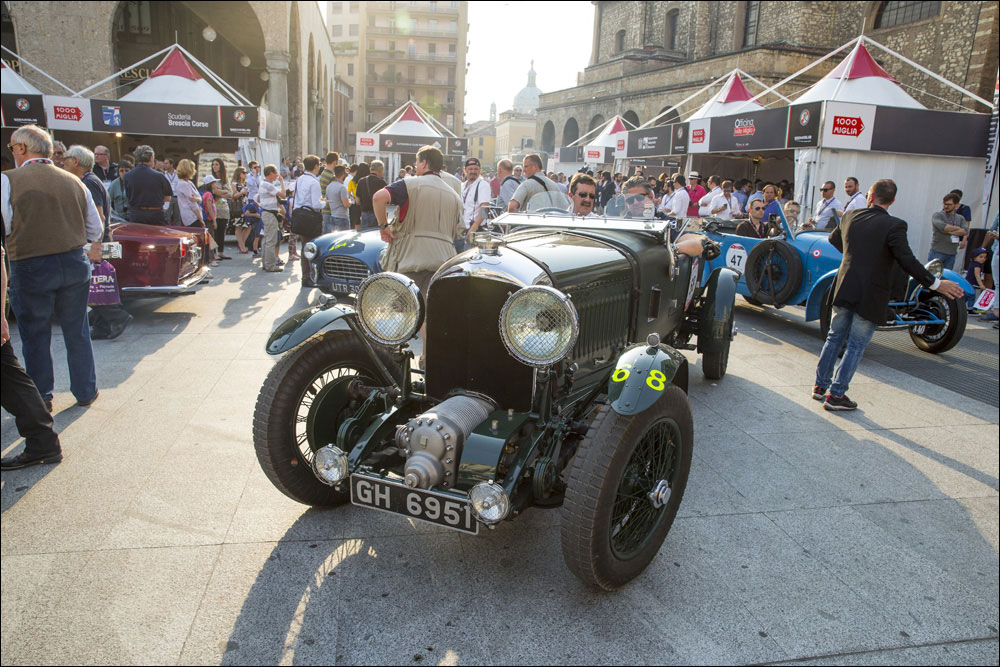

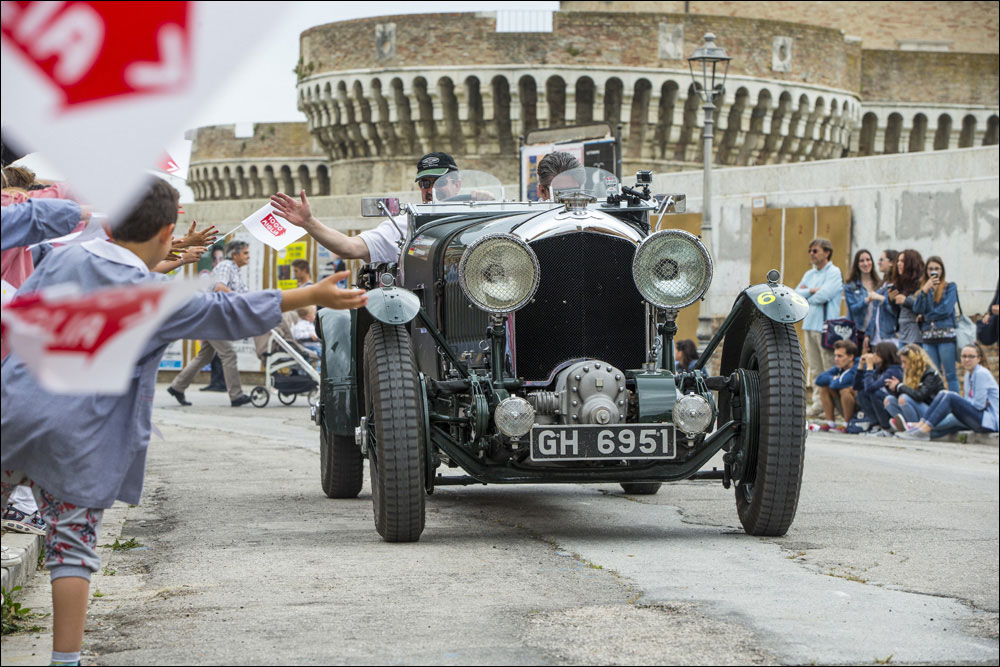
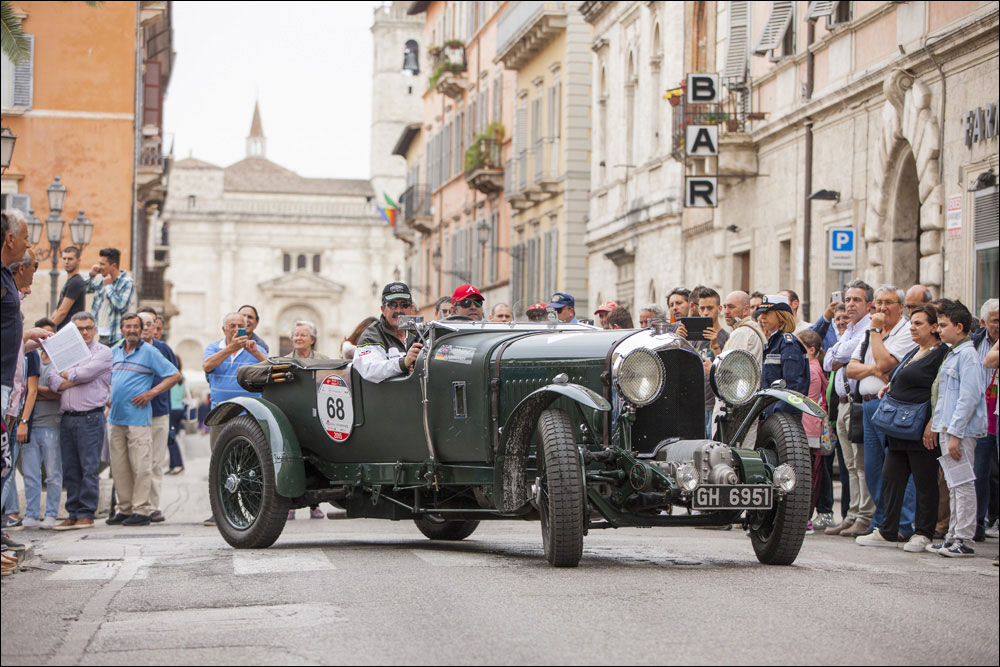
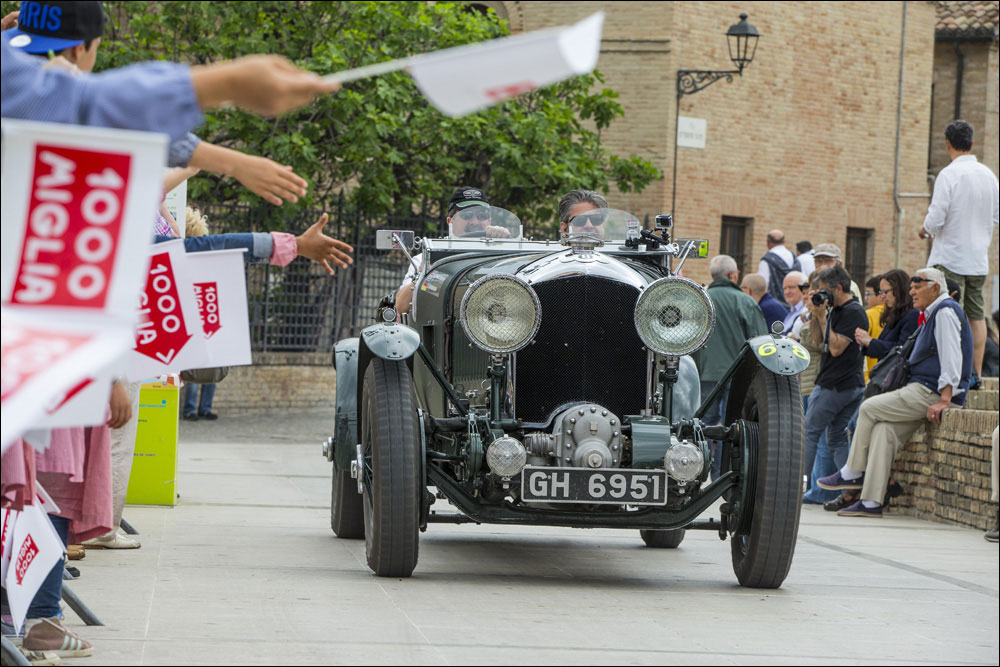

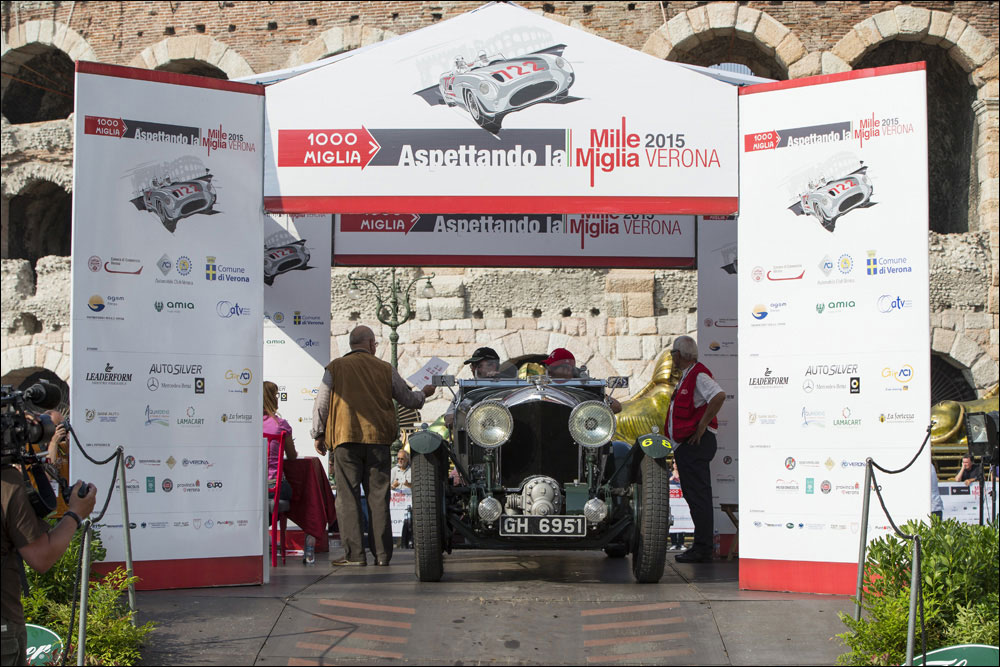
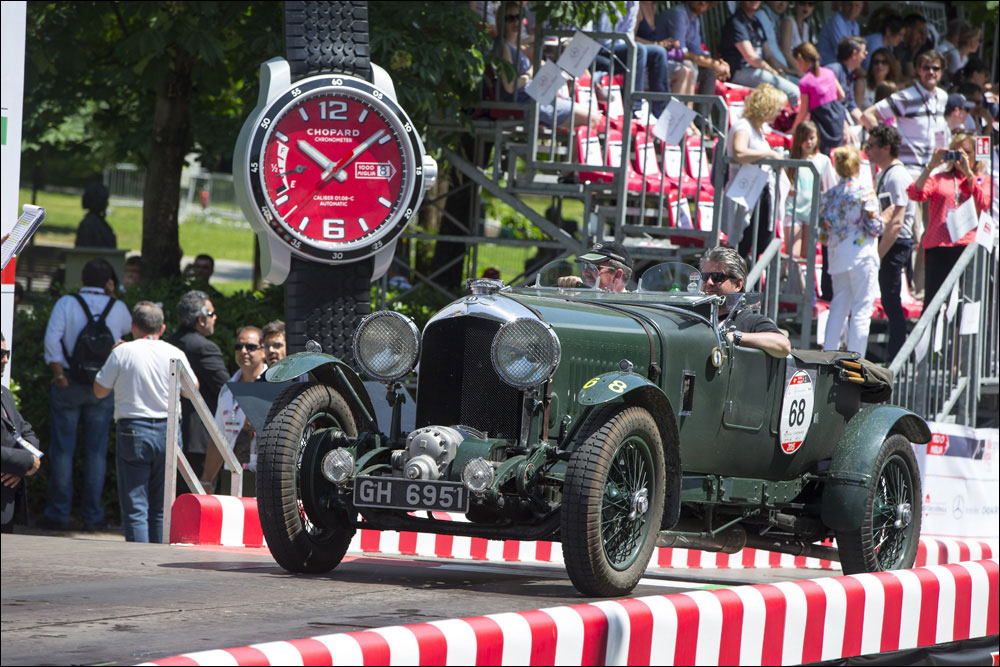
Read article 'British Speed in Italy: Bentley marks anniversary with Mille Miglia Run'.
Source: Bentley Motors
Posted: Jul 17, 2015
April 30, 2013
Click on thumbnail for larger view


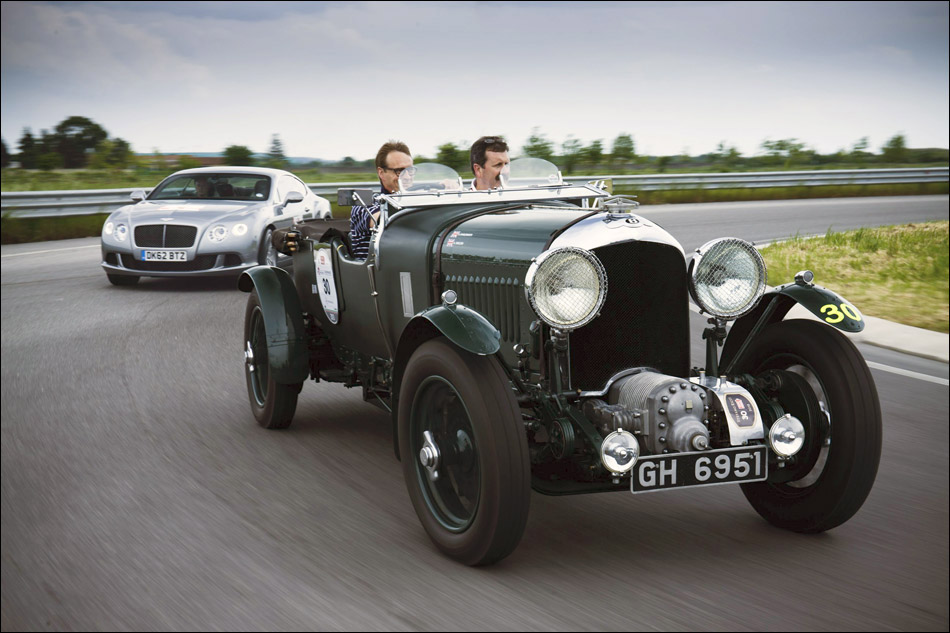
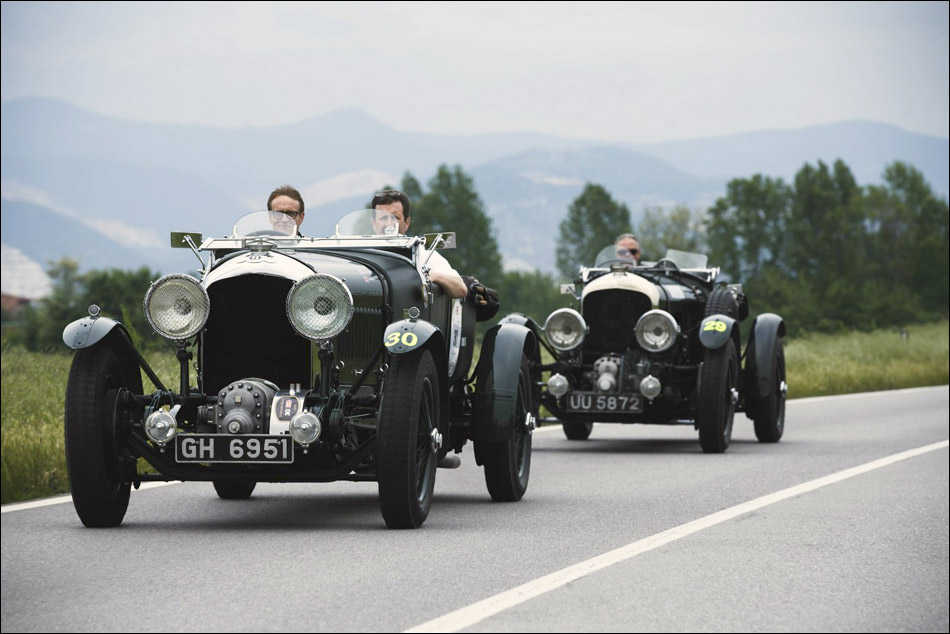
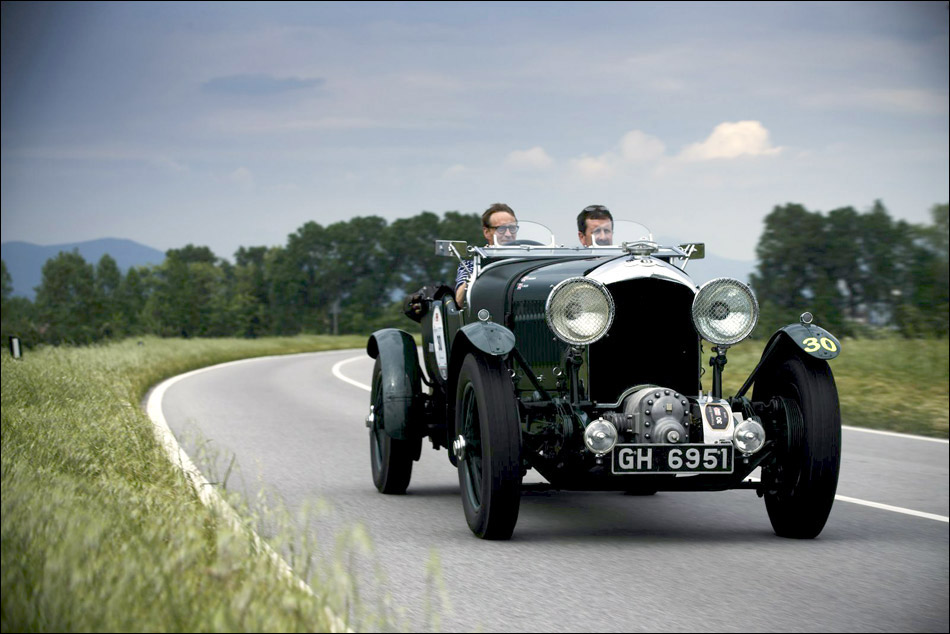
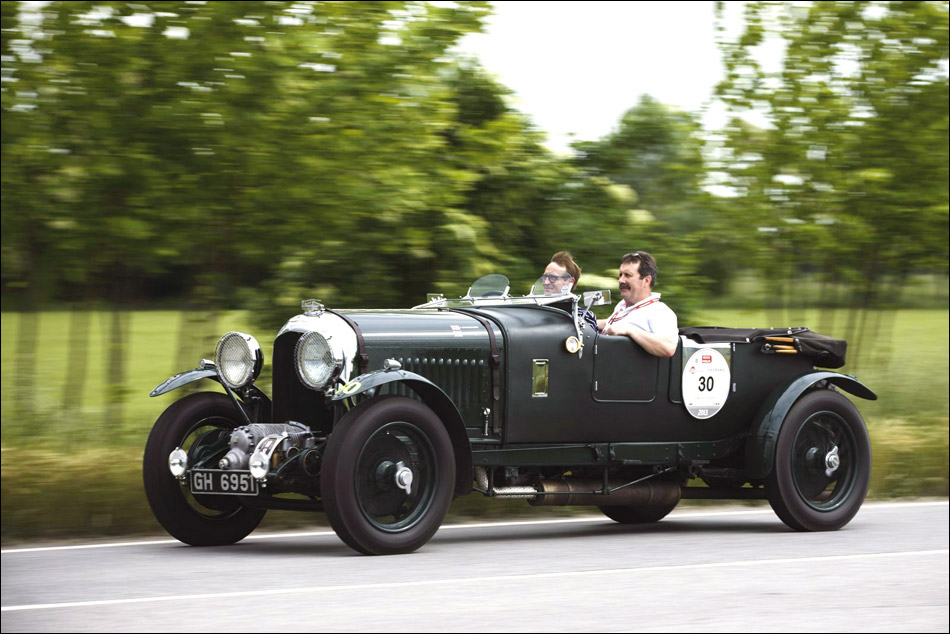
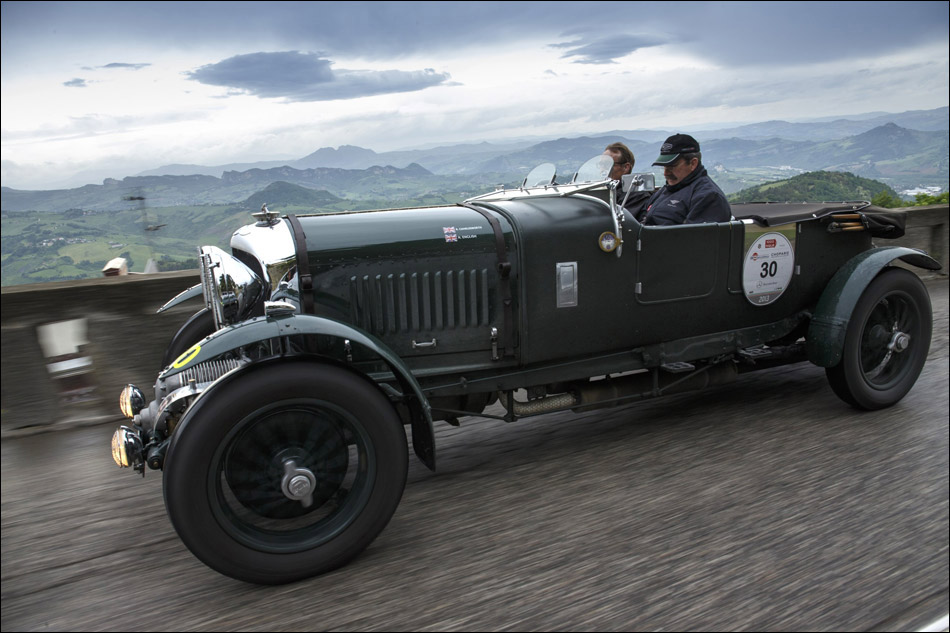
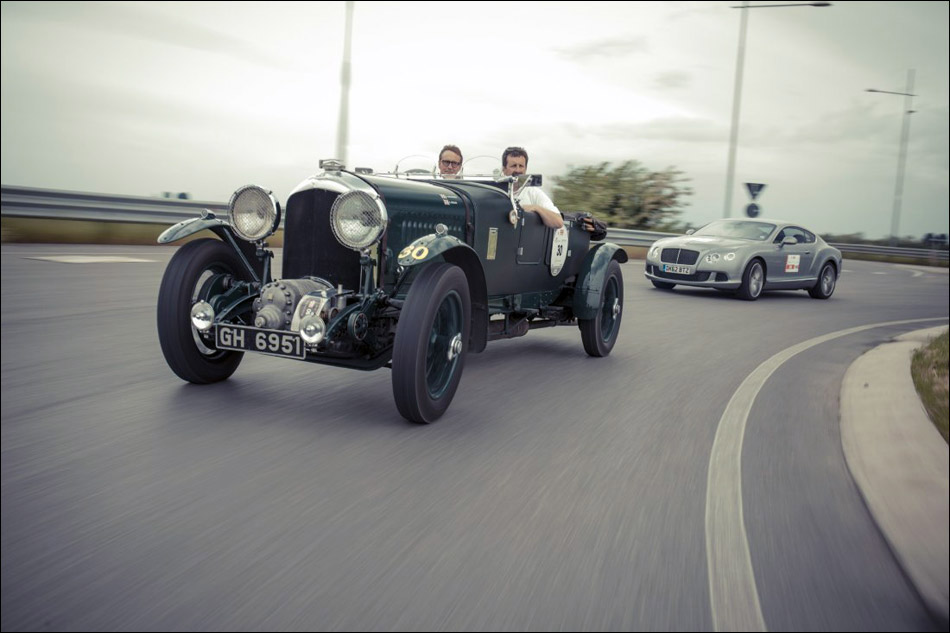


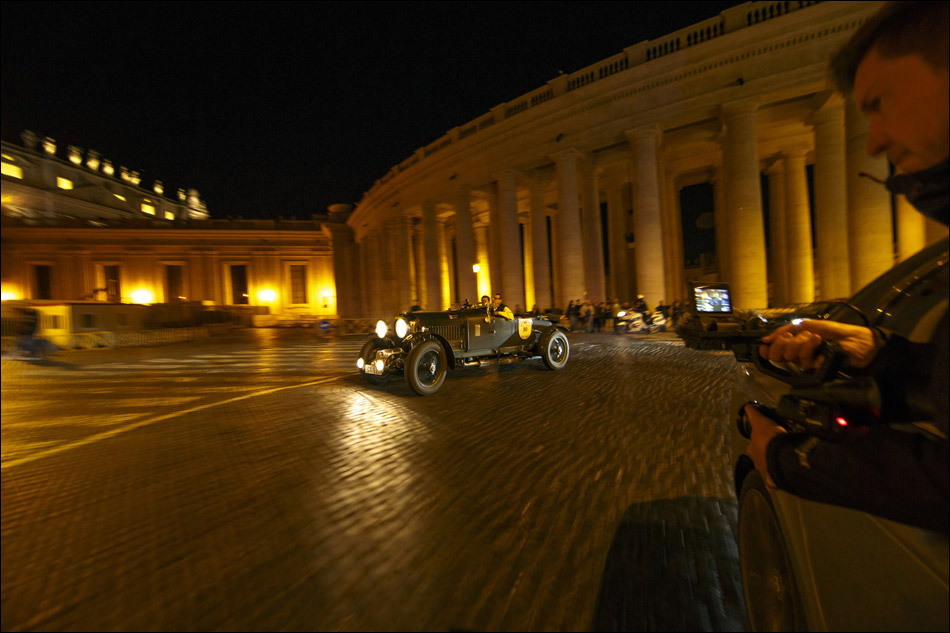
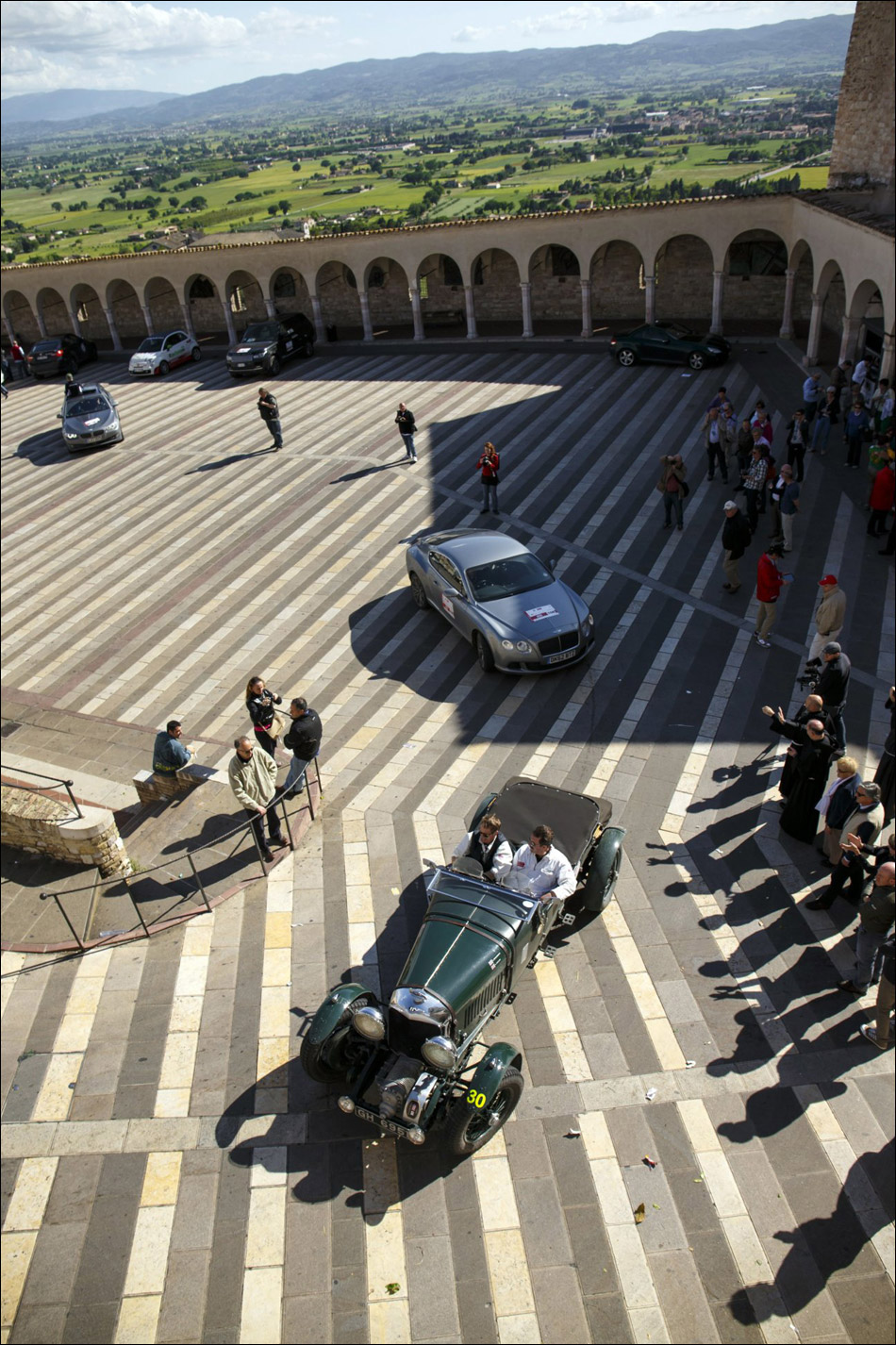

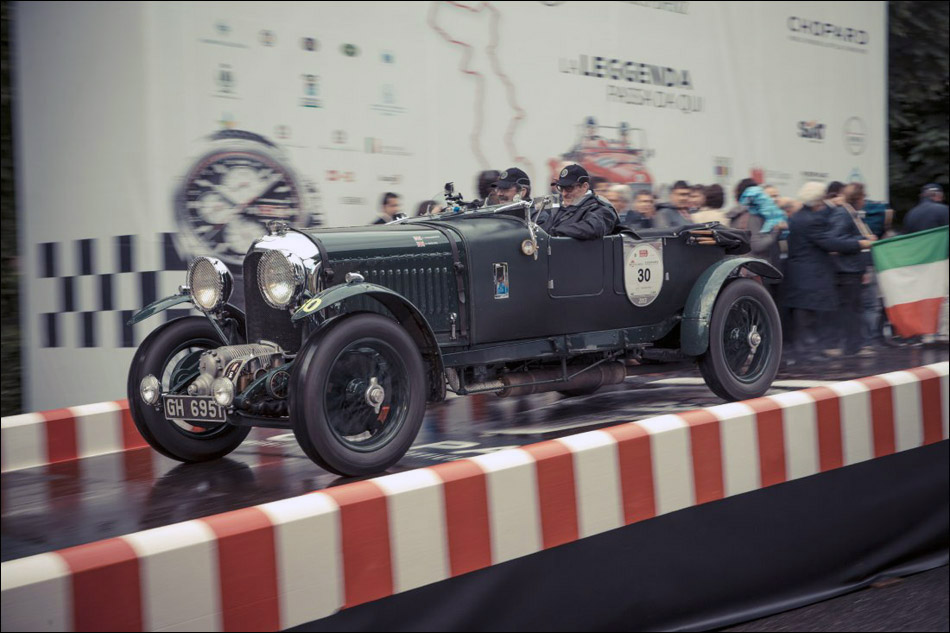
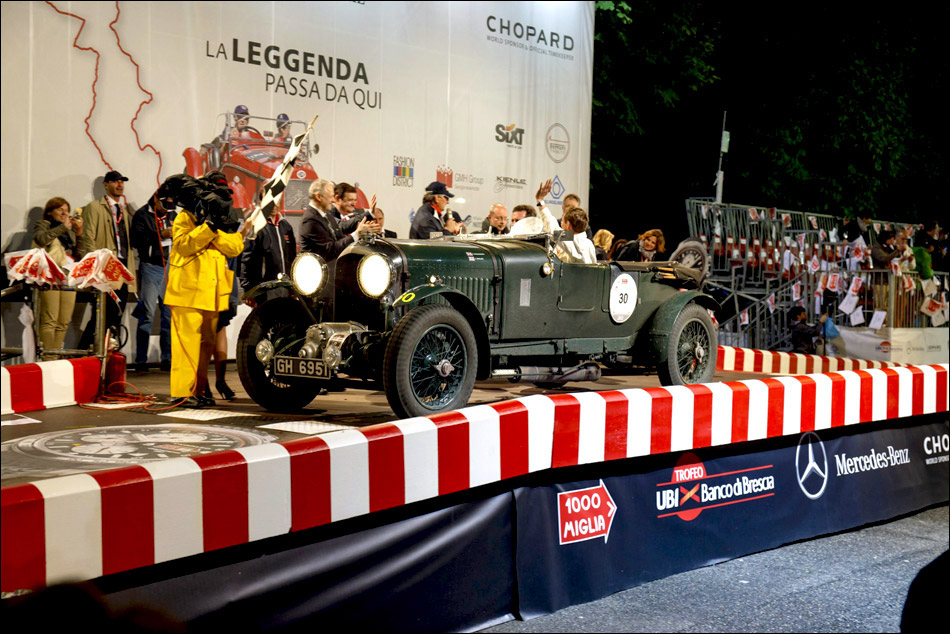
Source: From article "Iconic Blower Bentleys primed for Mille Miglia challenge" Press release issued by Bentley Motors
Posted: Jun 6, 2013
2013
"Just back from the Mille Millia and saw GH 6951 at Brescia and again at Sirmione. The last time I saw the Blower was at the 2008 Goodwood Revival and I've been meaning to call up Crew for a visit for some time now.
Brescia has prompted me into action and I'd like you to know that the Bentley was always in shared ownership with Bill Hardy and my father, Charles Griffith, back in the mid 1940s.
My Father relinquished his share to Bill in 1947 when we emigrated to then Rhodesia (now Zimbabwe). Through my father, I knew Bill and Paddy Hardy and have been in the car as a child, and again back in 1964 and 1984 with Bill when he was in full ownership.
I have several original photographs of the Bentley from back in the mid 40s and would be happy to show them at any time. Although limited, I can also give you some information which relates to the car as well as authenticating some of the history you already have.
Please feel free to contact me at any time and I'll also call up the Crew works to pass on as much as I can."
Source: Mike Griffith
Posted: May 21, 2013
April 30, 2012
Click on thumbnail for larger view


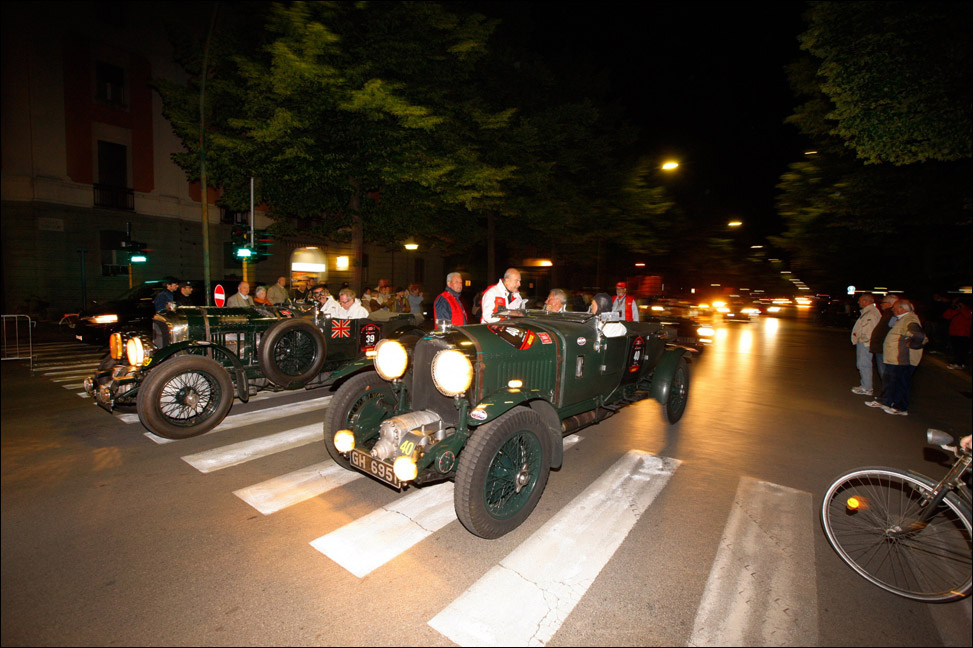
Source: Bentley Media
Posted: May 28, 2012
2012
Click on thumbnail for larger view
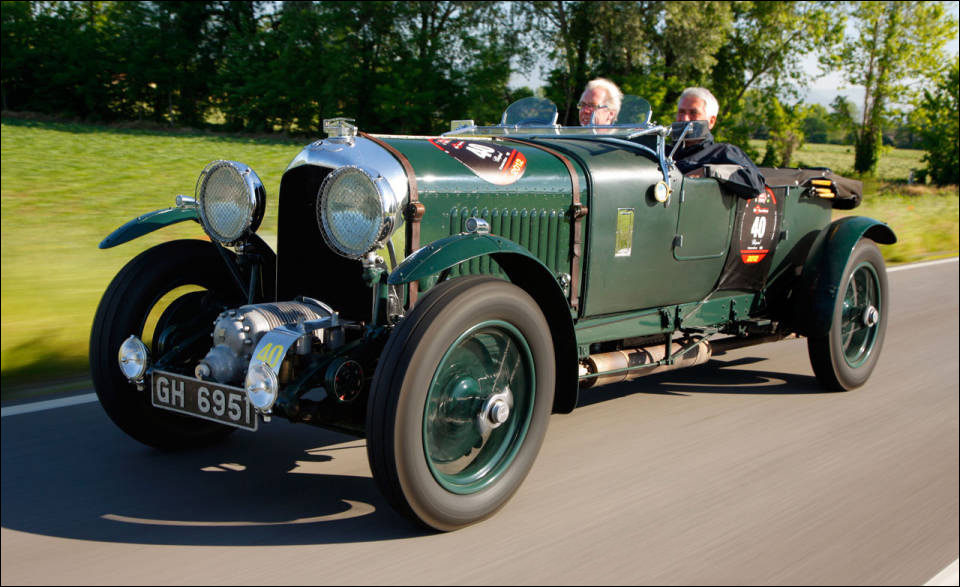
June 7, 2012 - By Ian Adcock (Photos by Nick Dimbleby/Bentley)
The Mille Miglia is, arguably, the greatest classic car event in the motoring calendar: two and a half days and 1000 miles through some of Italy's most stunning scenery, including visits to Verona, Padua, the Republic of San Marino, Rome, Sienna, Bologna and Modena before returning to the start/finish line at Brescia.
It is also uniquely Italian.
No other nation has a love affair with cars like the Italians. Men, women, young and old throng the roads hoping to catch a glimpse of the contestants and their machinery and when that is a pair of Blower Bentleys dating back more than 80 years they are drawn to them like moths to a flame. I've never had my photograph taken so often or, bizarrely, signed so many autographs as I did during this year's event.
Bentley being Bentley didn't ferry their precious Blowers down on a truck, we drove them the near 1000 miles from the UK to Brescia. Both cars easily held their own at a steady 80-90 mph on motorways across France and into Switzerland before crossing into Italy.
Following them in a W-12 Continental GT coupe I was surprised that even in the confines of the air-conditioned cabin, and trailing them by 100 yards, how their distinctive exhaust notes could be heard: the 1929 Team car, No. 9, with its fishtail exhaust a deeper, bassier note than the 1930 car with its standard exhaust.
Famously, W.O. Bentley disapproved of the Amherst Villiers supercharged engines that Tim Birkin used in the Dorothy Paget sponsored cars, believing that the route to extra power lay through increased capacity rather than forced induction. He did, however, relent on the condition that Birkin would follow team orders in the 1930 Le Mans race.
Bentley's biggest rivals for that year's event were the fearsomely quick Mercedes-Benz SSKs. Also supercharged the difference was that the driver's switched the blower on and off like an afterburner, whereas the Bentley's was permanently engaged. Birkin set off as the hare, setting a searing pace which would gradually grind the SSK's into submission. Number 9 lasted for 18 hours before it too failed, leaving the way open for Barnato and Kidston to claim Bentley's sixth victory and fifth as a works team.
GH6951 is one of 50 road cars built to satisfy homologation rules of the time riding on a 130-in. chassis. This one is, in fact, the 17th built with a standard Vanden Plas touring coachwork. It was also Bentley Motor's London showroom demonstrator before it was sold into private ownership in 1931. Bentley acquired the car at the Festival of Speed for £414,000 ($646,000) and have completely restored it, including a new fabric body and rebuilt the ash frame where needed.
Weighing in at some 3858 lb. it's a hefty car to be powered by only 175 bhp at 3500 rpm with 9-psi boost, yet it will still reach three figures (just about), if pushed and given a long enough time to get there.
Number 9, the Birkin team car, was probably the most valuable car on the event. Although Bentley refuses to disclose how much they paid the late Victor Gauntlett for it in 2000 it was likely to be well north of seven figures. It differs visually from the homologation cars with a chassis that's 12.5 in. shorter, narrower bodywork and cycle style wings. A stronger crank allows boost to be upped to 10 psi increasing power to 240 bhp at 4200 rpm. That's sufficient for a 120-ish top speed, enough for Birkin to set a new Le Mans lap record in 1930 of a remarkable, for then, 89.696 mph.
As valuable as these cars are, I was instructed by Andrew Day, president of the Bentley Drivers Club, and later echoed by head of Bentley's Heritage Collection, Richard Charlesworth, to treat the cars firmly and with respect. Being gentle just doesn't work with vast drum brakes and non-synchro gear boxes: as with the 8-Litre I drove last year you need to double de-clutch on the way up the gearbox and down, but this time with a hefty boot on the throttle to bringup the revs. Try to ease the right-hand located lever through the ratios just results in gears clashing like some angry mechanical beast chewing on them.
The most challenging change on both cars was 2nd to 3rd, in both directions, but because the engines rev so slowly and have such a wide spread of torque they will pull away in 3rd gear from as low as 1000 rpm, although it can be like a steam train grinding its way up a long gradient. Once momentum is gained, both cars were surprisingly easy to pilot, the Birkin car the nimbler, if that word can be used with cars this big and heavy.
Both cars force you to re-evaluate your driving style, demanding that you read the road ahead and plan your manoeuvres. Late braking and turn-ins are a strict no-no, as they would simply understeer into oblivion; brake well in advance in a straight line and be prepared to muscle that large diameter, thin rimmed steering wheel through the corners.
Electrical gremlins, centred around modern fuel pumps, blighted both cars during the event, more so the Birkin car, so much so that Charlesworth and I were the last to officially finish this year's event. The final indignity being a blown fuse within sight of the finishing ramp in Brescia, by which time our support crew had long gone. Fortunately we managed to jury-rig a spare fuse and Old Number 9 limped over the line at nearly 2 a.m. on the Sunday morning.
Little wonder then that the first I knew of the magnitude 6.0 earthquake that hit the region in the early hours of that morning was when I went for breakfast and saw images on the local television news.
Source: Road & Track
Posted: May 6, 2013
September 30, 2010
Click on thumbnail for larger view

Source: Car Middle East
Posted: Nov 29, 2010
May 31, 2010
Click on thumbnail for larger view
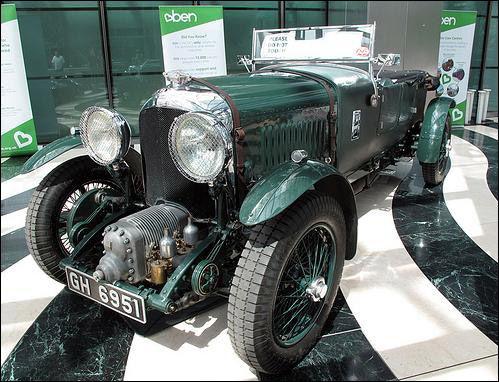
Source: Flickr, photo posted by user 'kikxmomo'
Posted: Aug 4, 2010
2009
Click on thumbnail for larger view
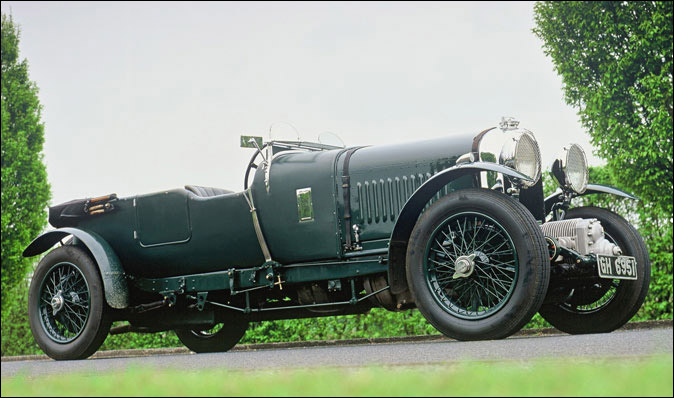
Source: Michael J. Immecke
Posted: Sep 29, 2009
August 31, 2008
Click on thumbnail for larger view
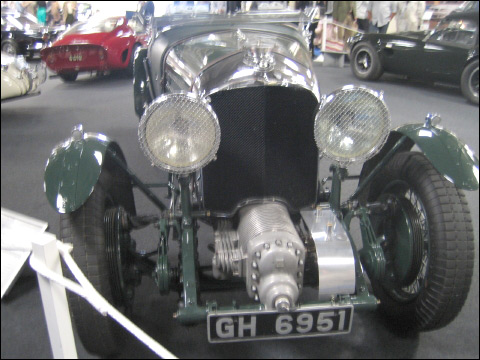

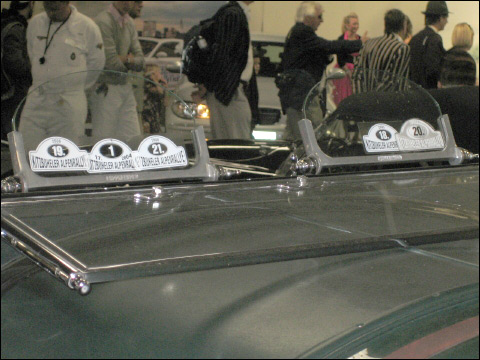
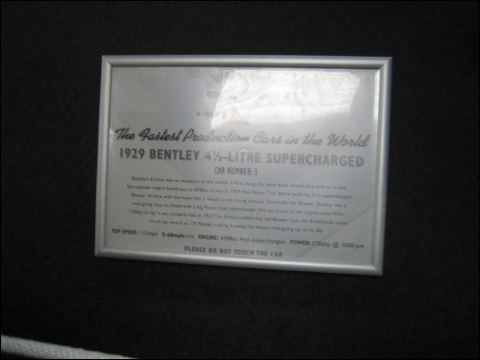
Source: Bob Rippon
Posted: Sep 29, 2008
2007
Click on thumbnail for larger view
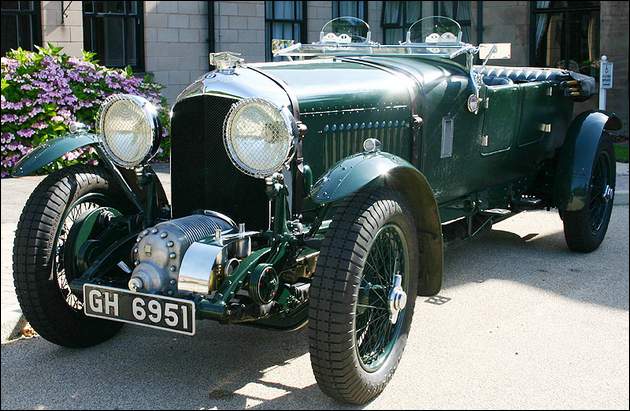
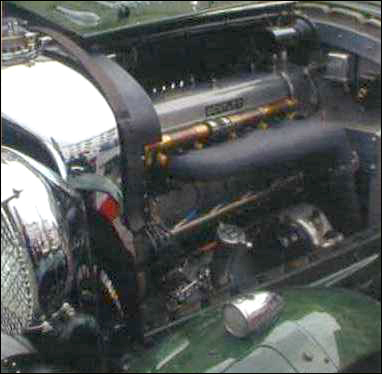
As we blast along hedge-lined roads near Bentley's factory (where the car now resides) in Crewe, England, our pilot is Ulrich Eichhorn, Bentley's head of engineering. The 4398-cc four-cylinder roars as Eichhorn shouts over the wind and engine noise, pointing out tht car's unique traits. One of these is the "normal" pedal placement, with the gas pedal to the far right. Most Blowers had the gas pedal mounted between the clutch and brake pedals.
Depending on revs and boost settings, the engine delivers about 180 hp. The Amherst Villiers-designed supercharger is located in front of the imposing radiator. Full boost arrives at 3900 rpm, and the big Bentley easily maintains a steady 80 mph.
The ride is more comfortable than you'd imagine. The 117.5-inch whcelbase soaks up most bumps and transmits only the occasional jolt to the cabin. Eichhorn powers the car through sweeping turns, the 21-inch Dunlop tires chirp, and the worm-and-roller steering keeps the huge green hood stretching before us pointed in the right direction. "Can you imagine driving this car at Le Mans for 24 hours?" yells Eichhorn, before punching the gas pedal again.
Source: "AutoWeek" magazine, Dec. 17, 2007
Posted: Dec 21, 2007
2003
Posted: Jan 1, 0001
2001
Click on thumbnail for larger view
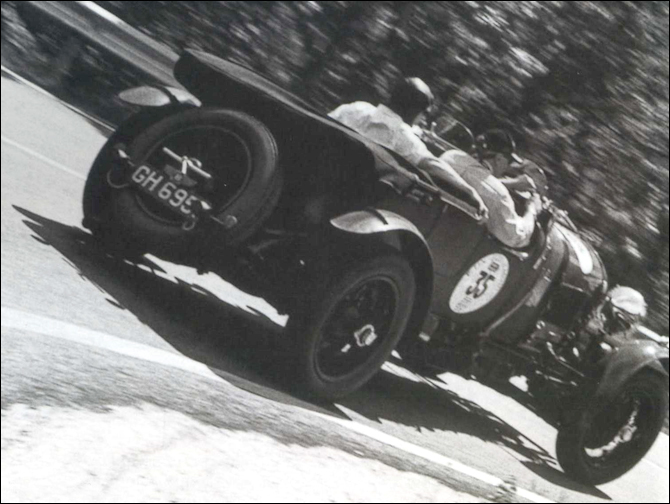

Source: "Bentley" magazine, Issue 01, Spring 2002
Posted: Jan 30, 2008
1931
Jack Lambert plays the chauffeur to Benita Hume. There's some rather hairy cornering, and I think that the car clips a wall. It gets stolen by Harold Huth at Craigenlarich (the real Crianlarich) station, where Huth pursues the train that Benita has got onto, heading back to Glasgow.
There's even a splendid broadside skid into another station.
The car certainly wasn't mollycoddled in this film!"
Source: Nick Dando
Posted: Aug 3, 2014
Click on thumbnail for larger view
Source: "Queste" magazine, Bentley Special Issue, 1984
Posted: Feb 1, 2007
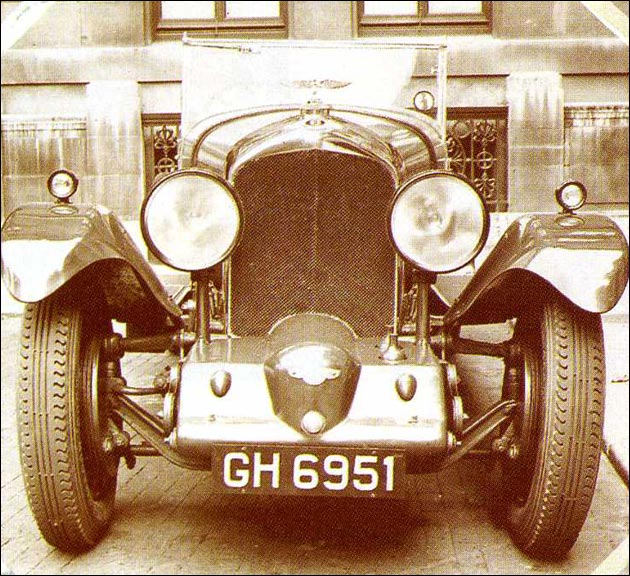
Production Blower Bentleys had handbrake handles made from rectangular stainless steel, whereas the five 4½ litre race cars for Tim Birkin had the "H" section handle, but were drilled for lightness.
Source: Robert McLellan
Posted: Feb 20, 2008
Click on thumbnail for larger view

Source: YouTube
Posted: Oct 25, 2008
Click on thumbnail for larger view

Source: Internet Movie Car Database, YouTube & Gareth Thomas
Posted: Jun 30, 2007
Click on thumbnail for larger view

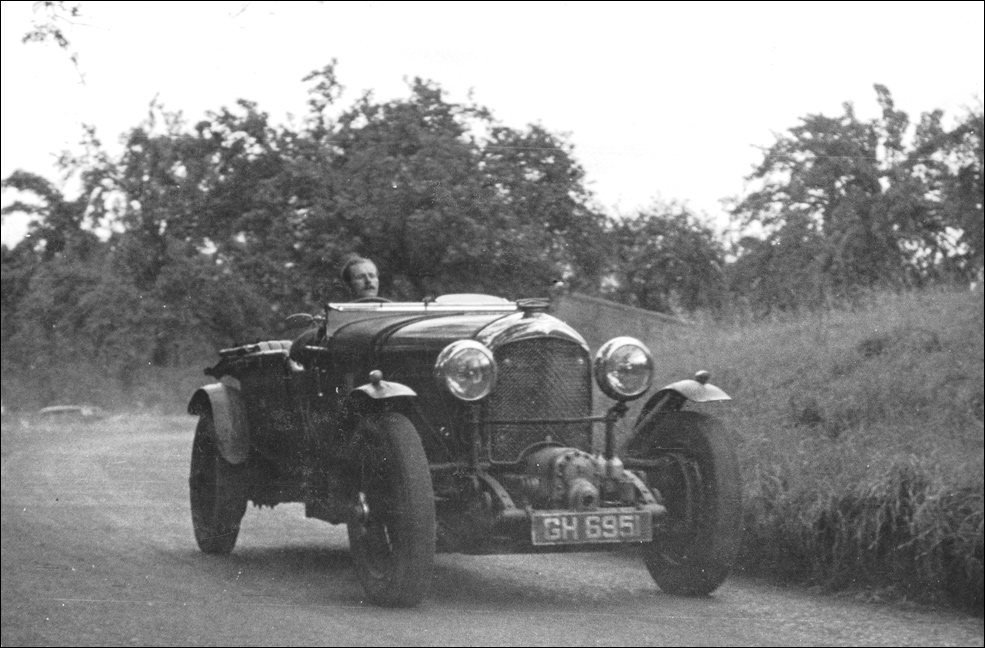
The last time I remember being in it was with Bill taking my Father and me for a spin along the Hogs back in Surrey in 1984 when Father came over to visit me. I remember Bill telling me that they found it in an orchard and from memory, gave the owner at the time £140 for it. Not bad for something that is probably priceless today!!
Father raced it mostly up Hill Climb events and I have rather a nice shot of him at Prescott in 1946 which hangs in my office at home. I've seen it at the Goodwood Revival before and I know that Crewe take it to global events from time to time. Out of interest, I've been meaning to contact Crewe for some time as I have a few other old pictures (above) from back in the 40s.
I trust you may find this interesting and please keep me in the loop with your news letters which I find most interesting."
Source: Mike Griffith
Posted: Jun 19, 2014
Click on thumbnail for larger view

Source: "Octane", January 2006 issue
Posted: Jan 25, 2007
Click on thumbnail for larger view


Source: October 1994 issue of "British Cars"
Posted: Jan 19, 2007
Click on thumbnail for larger view
Source: From article "The Autocar" Road Tests (4½-litre Supercharged)" published in "The Autocar", September 19, 1930
Posted: Feb 25, 2008
Click on thumbnail for larger view
Source: Unknown
Posted: Jun 18, 2008
Click on thumbnail for larger view
Source: "Queste" magazine, Winter 1999
Posted: Dec 20, 2006
Earliest Record Of Historical Facts & Information
| Chassis No. | SM3917 |
|---|---|
| Engine No. | MS3933 |
| Registration No. | GH 6951 |
| Date of Delivery: | 31 Jul 1930 |
| Type of Body: | 4-seater |
| Coachbuilder: | Vanden Plas |
| Type of Car: | 119 |
| First Owner: | CHANDLER P |
| More Info: | According to original Vanden Plas Coachbuilder records, this car was originally fitted with Body No. 1682 with a supercharged; 4-seater Sports Le Mans; green fabric/green; 7/1930. Michael Hay, in his book Bentley: The Vintage Years, 1997, states: "D/7223. Vanden Plas body no. 1682. Demonstrator. S/C changed to no. 145." |
Mar 1, 2007