
Vintage Bentley
Production NOS.
Where To Look For
Chassis & Engine NOS.
Bentley Specials & Special Bentleys
Unidentified
Bentleys

1930 Bentley 6½ Litre SP3 D/H Coupe
Chassis No. LR2776
Engine No. KR2698
Registration No. GH 1517
August 15, 2009
Click on thumbnail for larger view
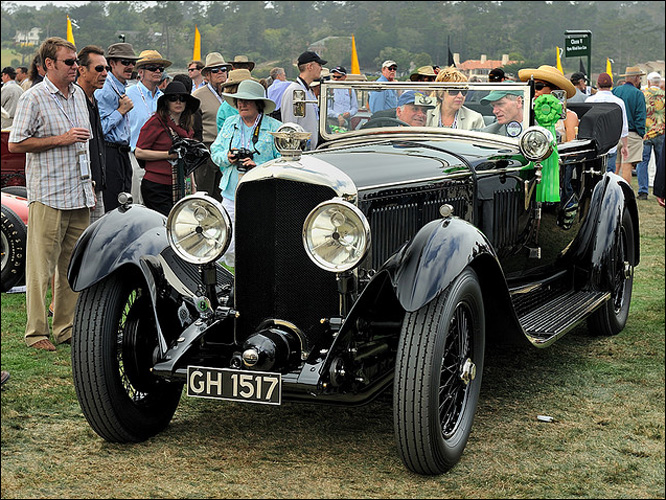
Source: Flickr, posted by user 'Beetlebomb Pohutukawa'
Posted: Mar 28, 2015

2009
Click on thumbnail for larger view
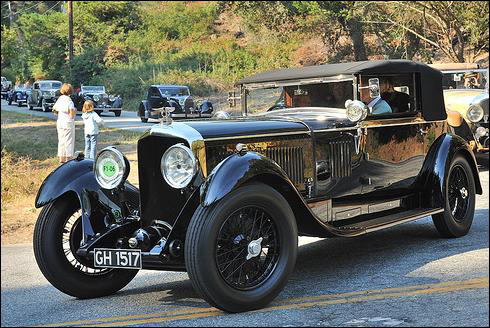
Source: Flickr, posted by user 'pohutakawa2008'
Posted: Oct 8, 2011
2008
Click on thumbnail for larger view
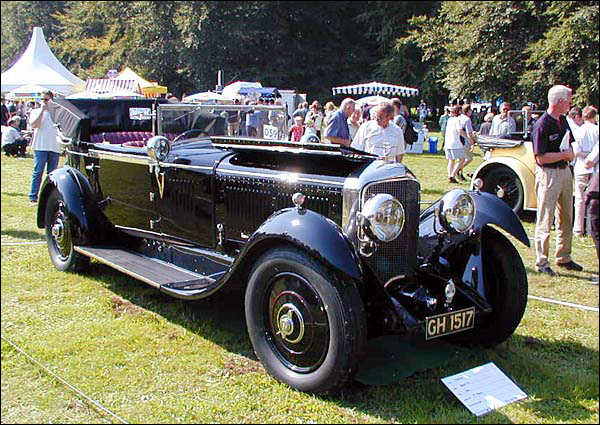
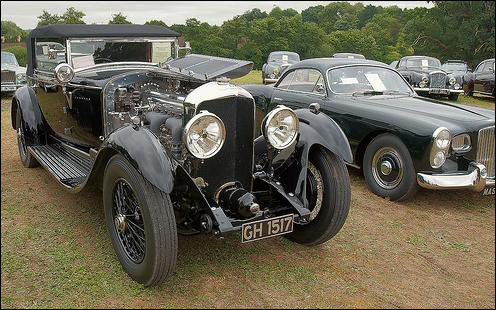

Source: Luiscezar Blog and Flickr, posted by user 'C22shooter'
Posted: Jan 19, 2009
2008
Click on thumbnail for larger view
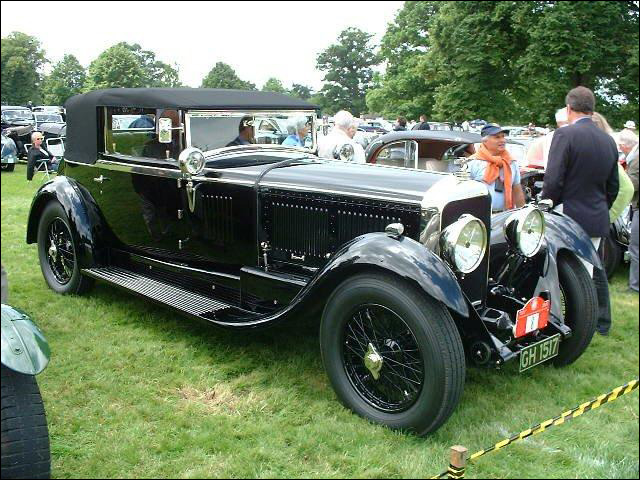
Source: Russell Browne
Posted: May 21, 2013
2006
Posted: Jan 1, 0001
Click on thumbnail for larger view


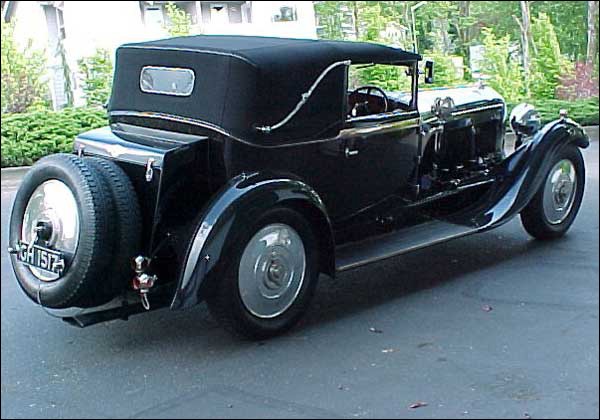
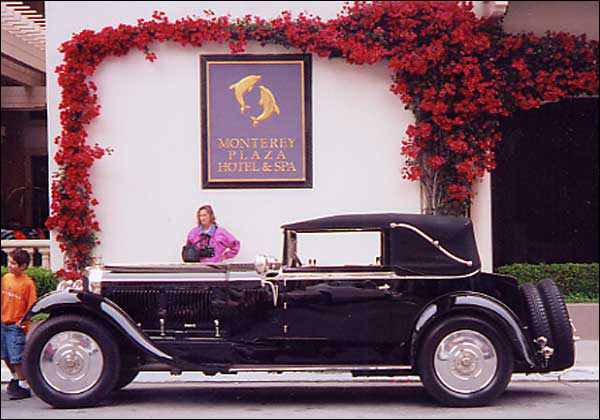

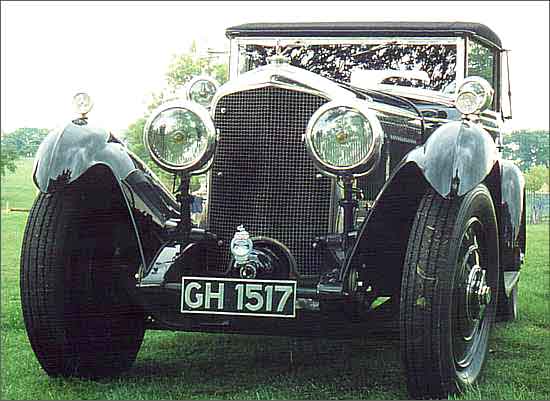
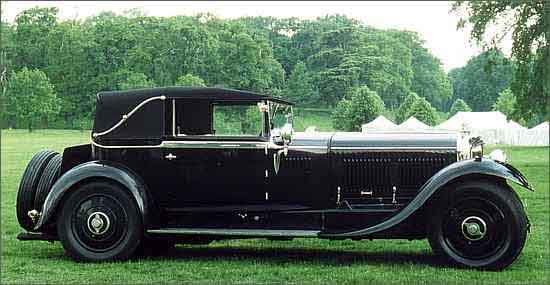
This stunning H. J. Mulliner drophead coupé is one of only a handful of Speed Six’s still retaining its original body. Beautifully restored, finished in black with red hides, this Speed Six won Best of Show in 1992 at the Louis Vuitton in Paris and was an award winner at the 2002 Pebble Beach Concours.
Although the six cylinder 6½ litre was announced as early as 1925, it was not until 1928 that the Speed Six, W. O’s favorite model, was introduced. The turbine smooth engine was progressively improved culminating in the remarkable Le Mans victories in what were in fact only mildly developed cars straight off the production line. Considering the 6½ litre was originally conceived as a touring car and a direct competitor with Roll-Royce’s New Phantom, the sporting achievements were all the more remarkable.
The all conquering Bentley Speed Six made motoring press headlines in 1929 and 1930 with its high point the glorious Barnato/Kidston victory at Le Mans in 1930, with Clement/Watney close behind in second position, surely one of W.O’s proudest moments.
Source: Hageman Motorcars
Posted: Jul 28, 2007
Click on thumbnail for larger view
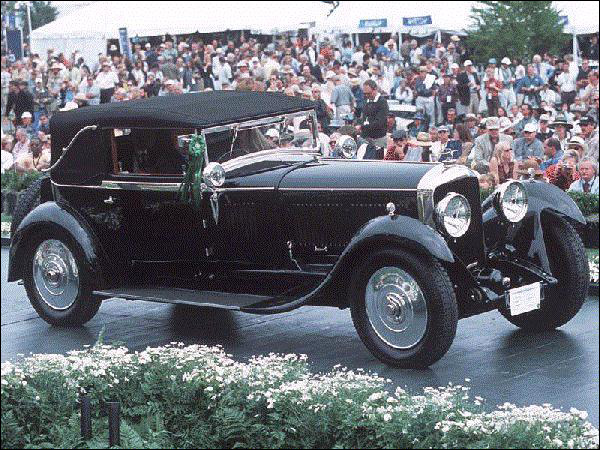
Source: 1MotorMart
Posted: Oct 8, 2011
Click on thumbnail for larger view
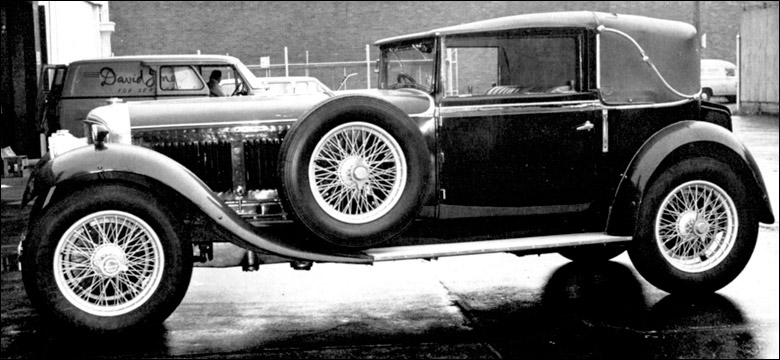
Coachwork By H. J. Mulliner, London
Reg. No. GH 1517; Chassis No. LR 2776; Engine No. KR 2698 S
Engine, six-cylinder, overhead-camshaft, monobloc, bore 100mm., stroke 140mm., capacity 6,597 c.c.: magneto and coil ignition: four-speed gearbox, right-hand change: spiral bevel final drive: foot-brake on four wheels, handbrake on rear wheels: suspension semi-elliptic front and rear: suspension semi-elliptic front and rear: wheelbase lift. 9 1/2 in.: tyre size 7.00 x 21: price new in England (chassis) £1,800.
FOURSOME DROPHEAD COUPE
The Speed Six won Bentley their last two Le Mans victories (1929 and 1930). 177 of the type were made, many of these with elegant closed and drophead coachwork, though unfortunately a goodly proportion of these have been transformed into open 'replicas' of one kind and another. This car, however, carries its original two-door, two-light four-seater drophead coupe body with cycle type wings. Early history is unknown, but it was in one owner's hands from 1950 to 1958, by which latter year it had covered only 118,000 miles. In 1960, the chassis and engine were rebuilt, and in 1961 the bodywork was reconditioned by Mead of Maidenhead. Only a modest mileage has been covered since, and general condition is described as excellent.
Source: From a sales catalog dated July 10, 1975
Posted: Jul 16, 2007
Click on thumbnail for larger view
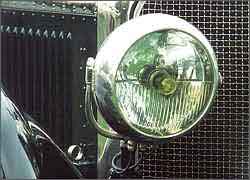
Source: Auto Car
Posted: Sep 20, 2007
Click on thumbnail for larger view
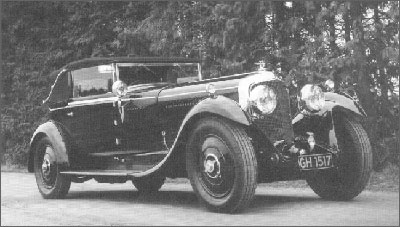
Source: Wim Kamper
Posted: Feb 23, 2007
Click on thumbnail for larger view
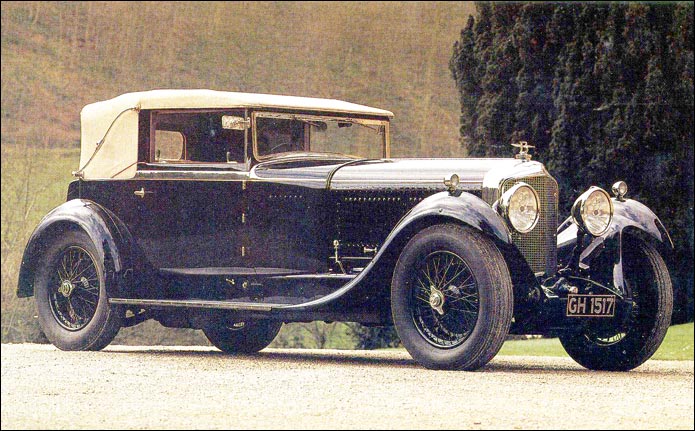
"It was obvious from the very first that the 6 1/2-litre Bentley would revolutionise big car performance. Not only did it possess all the good qualities of the 3-litre magnified a thousandfold, but would carry the heaviest coach-built bodies with ease..." — A.F.C. Hillstead, 'Those Bentley Days', Faber & Faber, London, 1953.
This magnificent vehicle is a fine example of arguably the most significant of all Bentley models, and one which was a particular favourite of the legendary Walter Owen Bentley himself.
This particular 6 1/2-litre was first registered in July 1930 to a Miss H. Bingham, and it is still fitted with its original body.
W.O. Bentley and his co-directors had realised as early as 1924 that a new and more powerful model was necessary to augment or supersede the 3-litre. They had introduced a 1 1/2in. longer 'Long Standard' chassis to the 3-litre range but customers simply had even more lavish and heavier coachwork fitted which again severely limited the finished cars' performance.
Experience with a prototype 4 1/2-litre car persuaded Bentley to enlarge the 6-cylinder engine still further to 6,597 c.c. One such chassis was ready in time for the 1925 London Show and the first production cars were delivered in March 1926.
The model was well received and subsequent development progressed until 1928 when the Speed Six model was introduced. It was W.O.'s personal favourite and also became the most successful of all the vintage period racing Bentleys.
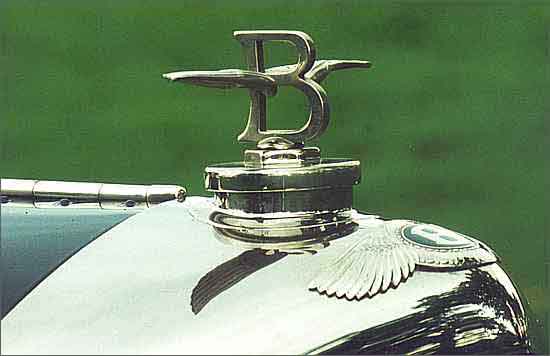
The Speed Six was recognisable by its massive parallel-sided radiator and 'green label' enamelled badges instead of the Standard Six's 'blue labels'. Beneath the bonnet the big 6-cylinder engine carried two SU HVG5 carburettors, and while the standard engine engine delivered a claimed 160 b.h.p — or 180 with the single-port block — the 1929-30 Team cars offered c. 200 b.h.p.
Source: Christie's Auction of Jaguar, Aston Martin, Lagonda and Bentley Automobiles in Monaco catalog, May 3, 1989
Posted: Dec 27, 2006
Earliest Record Of Historical Facts & Information
| Chassis No. | LR2776 |
|---|---|
| Engine No. | KR2698 |
| Registration No. | GH 1517 |
| Date of Delivery: | 30 Jun 1930 |
| Type of Body: | D/H Coupe |
| Coachbuilder: | H J Mulliner |
| Type of Car: | SP3 |
| First Owner: | BINGHAM Miss H |
| More Info: | Michael Hay, in his book Bentley: The Vintage Years, 1997, states: "Accident 2/31 - new frame fitted. Still fitted original body." |
Mar 1, 2007