
Vintage Bentley
Production NOS.
Where To Look For
Chassis & Engine NOS.
Bentley Specials & Special Bentleys
Unidentified
Bentleys

1929 Bentley 6½ Litre SP2 2-seater
Chassis No. KF2400
Engine No. KF2400 / WB2556
Registration No. PK 9460 / JD 9961
August 31, 2010
Click on thumbnail for larger view
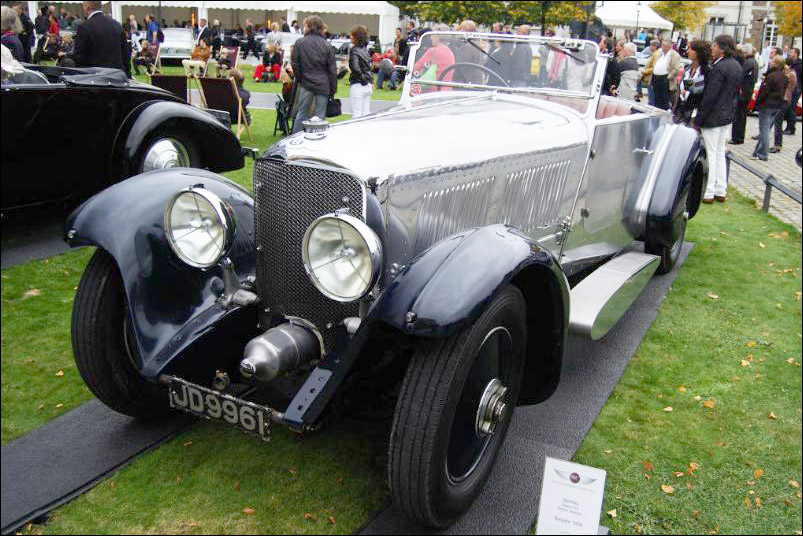
Source: Flickr, photo posted by user 'MMM85'
Posted: Oct 13, 2010

2004
Click on thumbnail for larger view
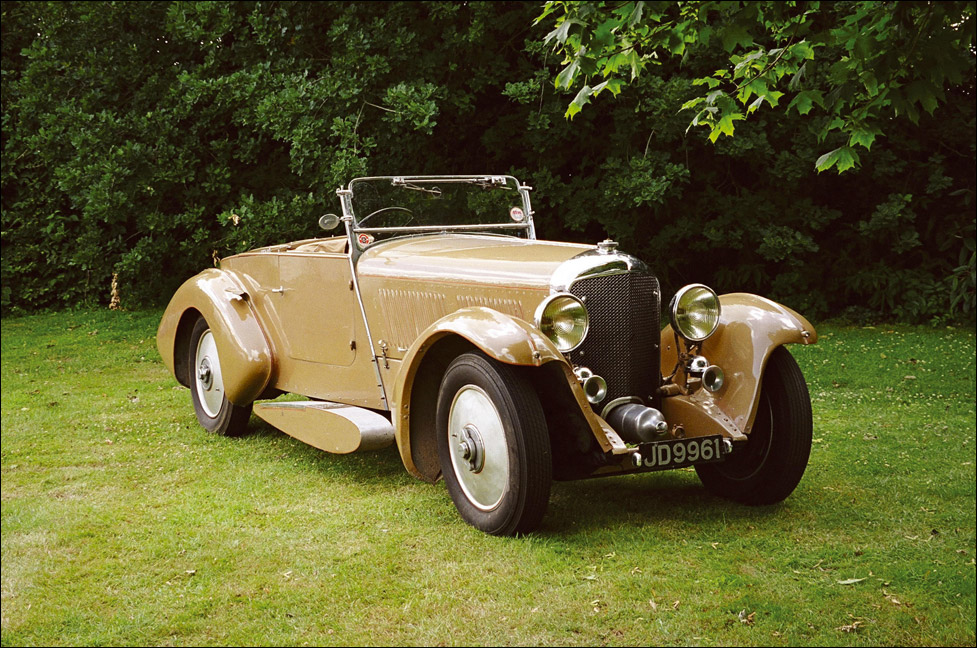
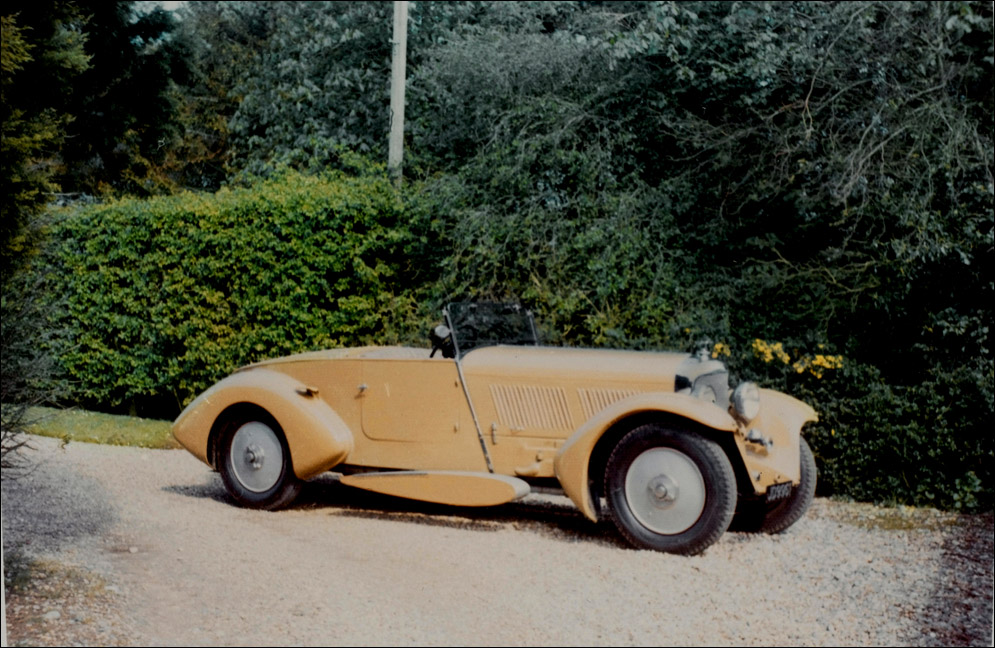
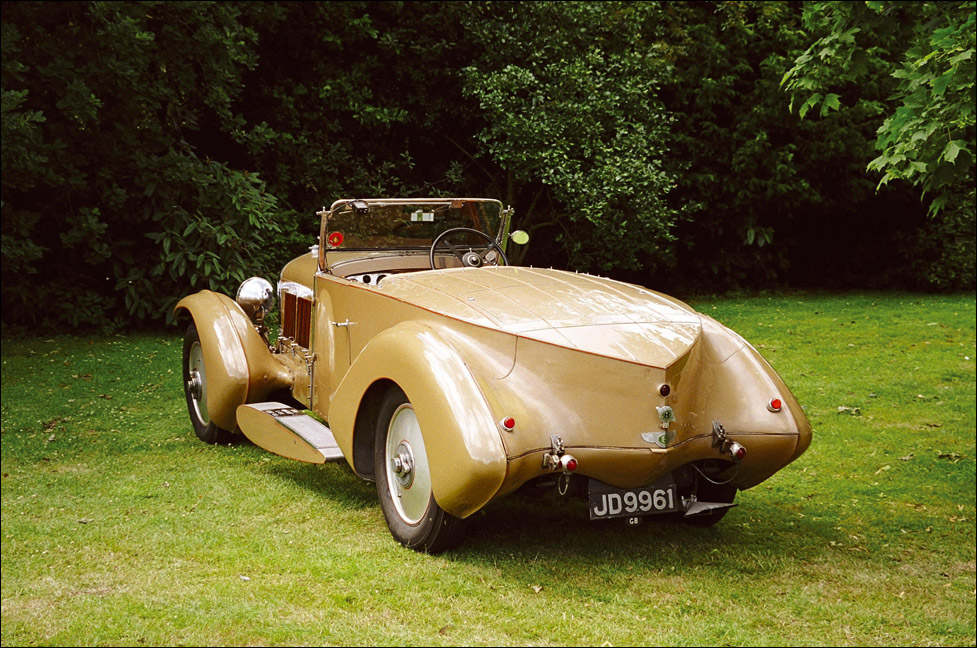
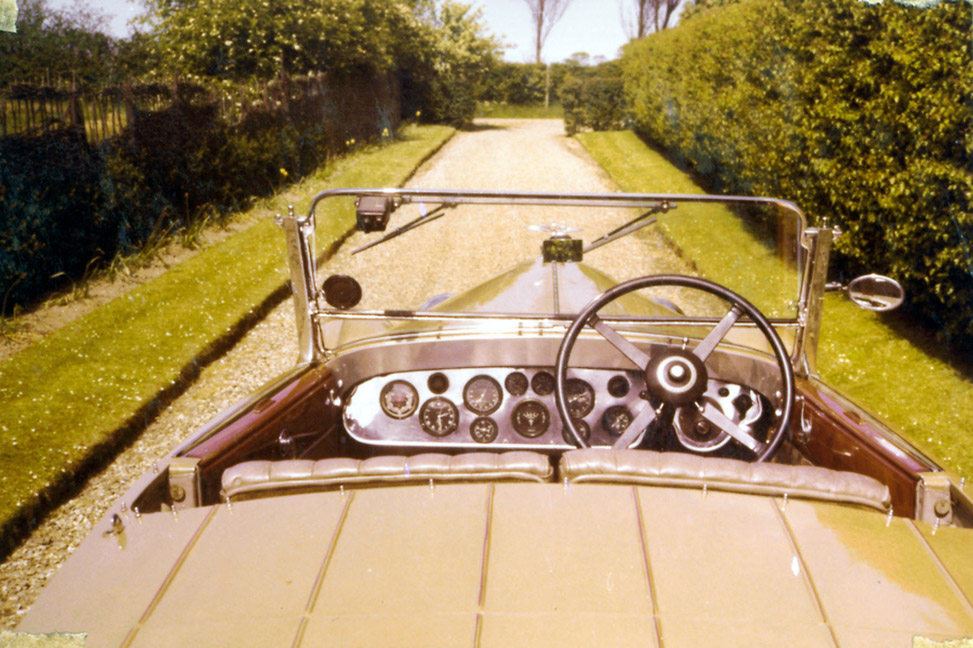
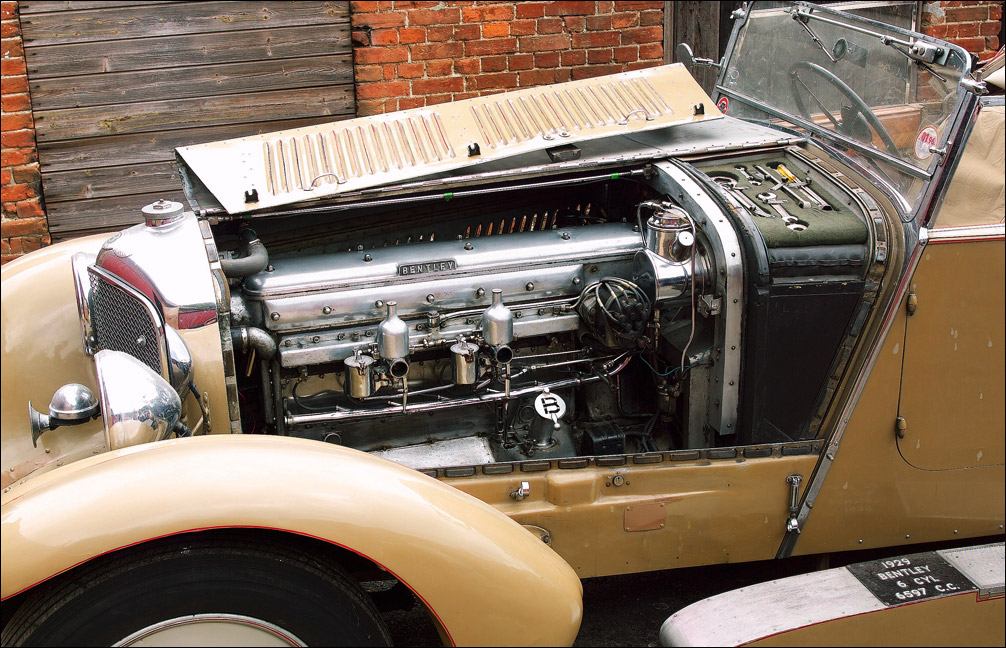
1929 Bentley Speed Six Boat-Tail Two-Seater
Coachwork by Barker & Company
Registration no. JD 9961
Chassis no. KF2400
Engine no. WB2556 (originally KF2400)
Sold for £309,500 inc. premium
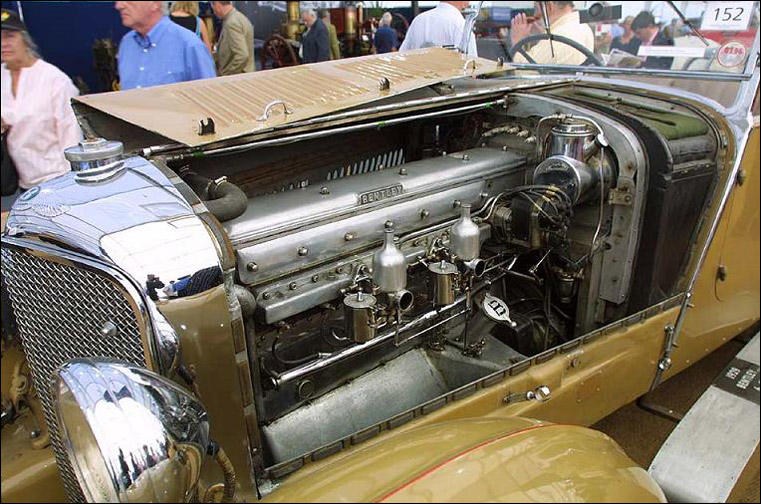
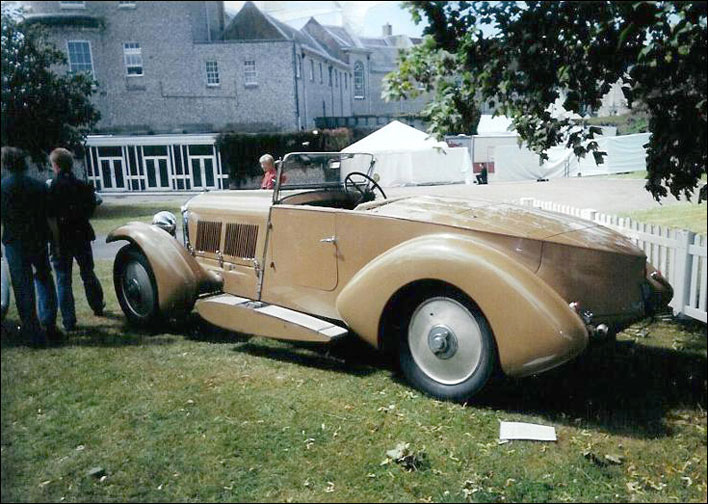
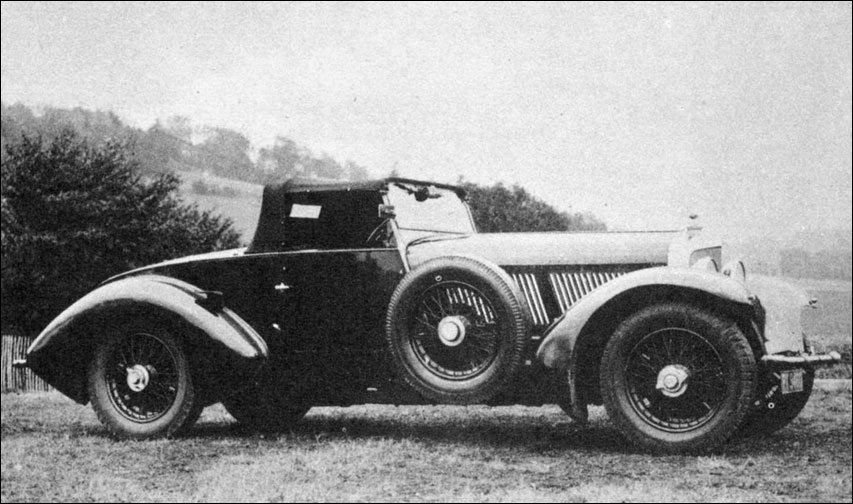
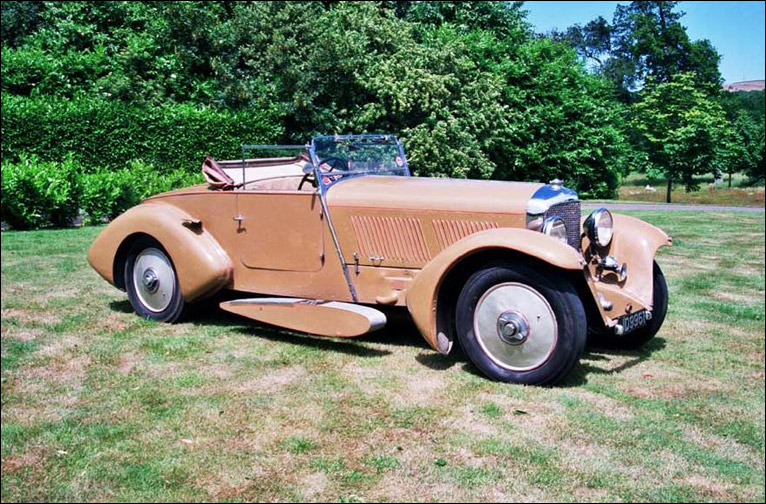
Few cars have the sheer presence of a big vintage Bentley, and few could outrank this stunning two-seater Speed Six with its extravagant 11ft 6in wheelbase. It is reputed to have originally been ordered by the Duke of Kent, but when he decided not to take delivery, the car was sold to stockbroker Ralph Jump of Guildford, Surrey, in July 1929. Beneath its flamboyant bodywork, this car has a similar mechanical specification to the car that won Le Mans in 1929 and 1930. This was one of three Speed Sixes of similar design built by Barker, of which one is lost and one is in America.
In 1937 it was acquired by Mr Deryck Hyland, an American working in England, who used the car to drive from his home in Hampstead to his office in the City of London every day. In 1974 he told George Milligen: I do recall one weekend causing a great scene in Bournemouth when I towed my speedboat to our house in Canford Cliffs and when I stopped for a drink at the Pembroke Grill the police asked if I would move on as the tout ensemble measured some 40 feet and there was a crowd of sightseeing people all gaping at the behemoth!
He sold the car in 1938 to H.B.Sayer, and in late 1940 it was acquired by the Brooklands racing motorcyclist Charles Mortimer.
Laid up during most of the war, it was found in Bristol in fairly rough condition by veteran and vintage car expert Leonard Taylor, who restored it with the help of Leslie Pennall, a master mechanic who had worked on W.O. Bentleys at the works right from the 1919 prototype. Aided by Pennall, Mr Taylor replaced the badly worn power unit with the engine from his crashed Corsica-bodied car, an early 6.5-litre unit that had been rebuilt to Speed Six specification by the great L.C.McKenzie, the leading W.O. Bentley expert of the 1930s. Mr Taylor re-registered the car KYA 639 to take advantage of the recently-introduced £10 flat rate road tax that was then only available on newly-registered cars.
It behaved beautifully and would cruise all day at any speed with the engine turning over at 1000 rpm per 30 mph, he recalled. On that car I could change down from top to third at 80 mph without a sound.
Soon after completing the rebuild, Mr Taylor sold the car to his friend Cyril Miers of Harrogate, a well-known Veteran Car Club member and most meticulous engineer. During the next 25 years, he only covered some 2000 miles with the Speed Six, selling it to George Milligen in 1974 for £15,000.
Mr Milligen attempted to regain the original registration to replace the 1940s number, but it was not available, so he obtained the more suitable JD 9961 index from a series first issued in 1929. Over the next 25 years he covered some 70,000 miles in the Bentley in Britain and on the Continent, and maintained it with his customary attention to detail, the many bills in the file including an engine rebuild by Arthur Archer of Dunmow.
This Bentley's supremely elegant bodywork led to its being one of only two W.O. Bentleys to be selected for the exclusive display of British coachbuilt cars organised in 1986 at Ragley Hall by the Worshipful Company of Coachmakers and Coach Harness Makers to celebrate the Centenary of the Motor Car.
Source: Bonhams
Posted: May 30, 2013
2004
Click on thumbnail for larger view
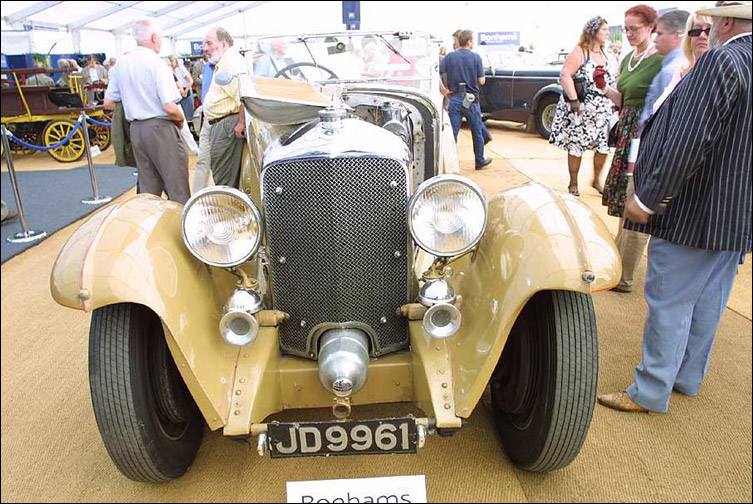
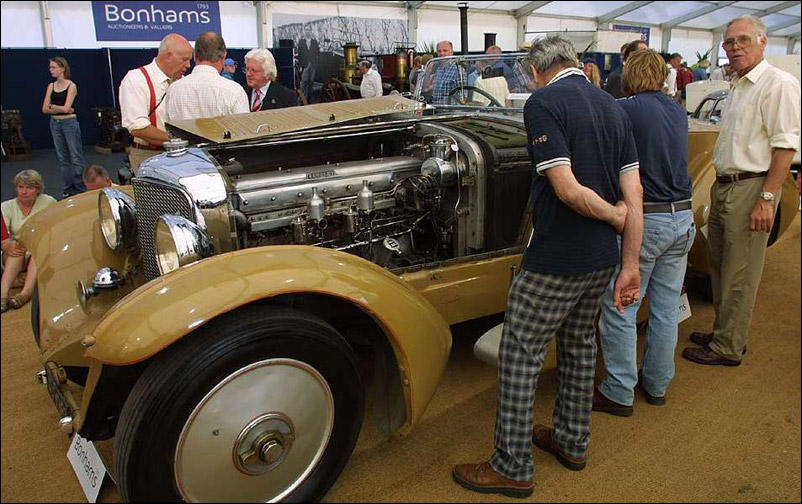
Source: MotorSnippets
Posted: Feb 14, 2009
2004
Click on thumbnail for larger view
Source: Webshots
Posted: Jul 3, 2008
2003
Posted: Jan 1, 0001
Click on thumbnail for larger view
Source: A History of Sports Cars by G. N. Georgano, 1970 Posted: Jun 01, 2007
Posted: Jan 1, 0001
Click on thumbnail for larger view
Source: MotorSnippets
Posted: Feb 14, 2009
Click on thumbnail for larger view
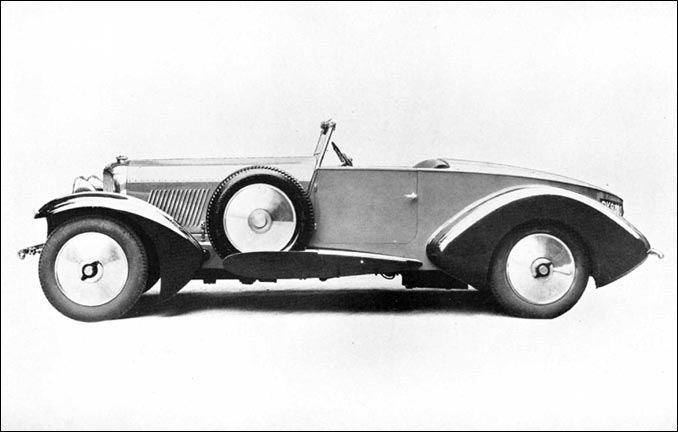
Source: From Chariot to Car by Robert J. Priest, 1930, which was produced for Barker & Co. (Coachbuilders) Ltd.
Posted: Apr 23, 2007
Earliest Record Of Historical Facts & Information
| Chassis No. | KF2400 |
|---|---|
| Engine No. | KF2400 / WB2556 |
| Registration No. | PK 9460 / JD 9961 |
| Date of Delivery: | 30 Jun 1929 |
| Type of Body: | 2-seater |
| Coachbuilder: | Barker |
| Type of Car: | SP2 |
| First Owner: | Ralph Jump |
| More Info: | Michael Hay, in his book Bentley: The Vintage Years, 1997, states: "Olympia show car. Reg KYA 639 - now JD 9961. Eng 2556 ex WB 2558." |
Mar 1, 2007