
Vintage Bentley
Production NOS.
Where To Look For
Chassis & Engine NOS.
Bentley Specials & Special Bentleys
Unidentified
Bentleys

1922 Bentley 3 Litre S 2-seater
Chassis No. 3
Engine No. 4
Registration No. AX 3827
August 31, 2019
Click on thumbnail for larger view
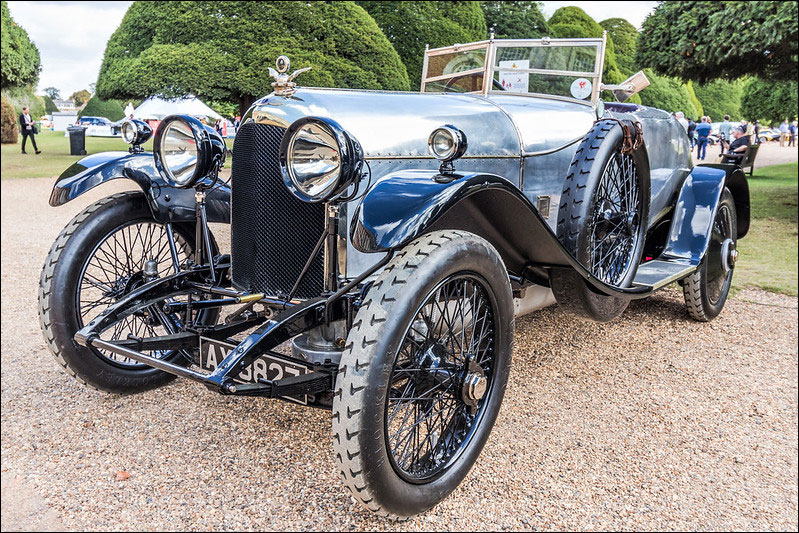
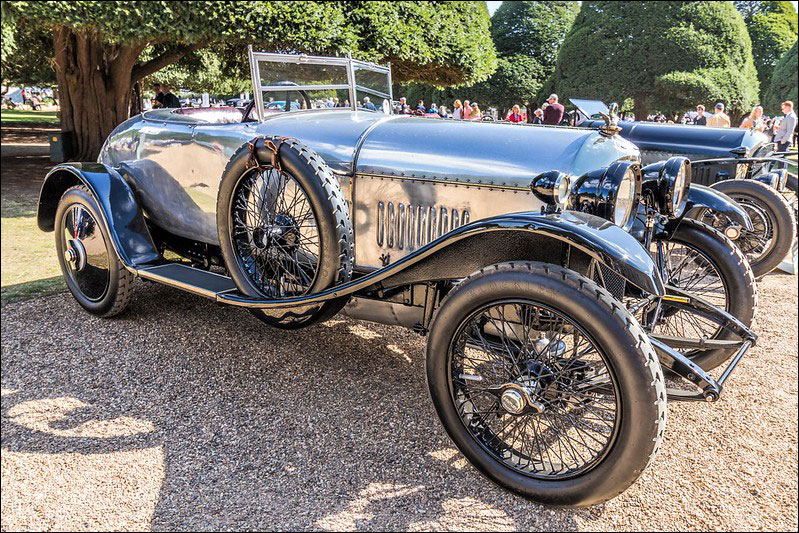

Concours of Elegance, Hampton Court, September 2019
Source: Flickr, posted by user 'John Tiffin'
Posted: Feb 11, 2020

July 31, 2019
Click on thumbnail for larger view

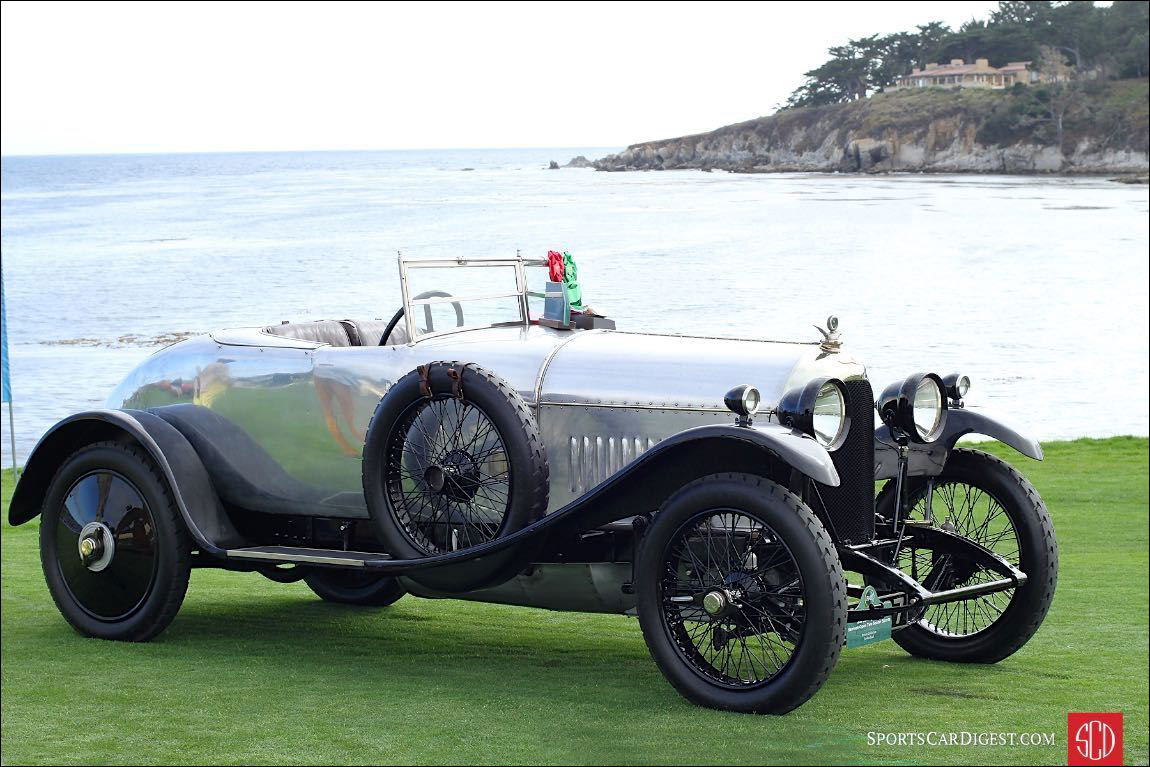
Source: Sports Car Digest
Posted: Oct 3, 2019
August 21, 2011
Click on thumbnail for larger view
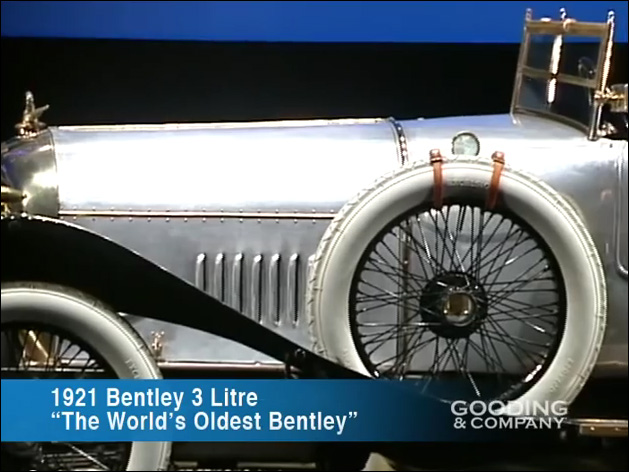
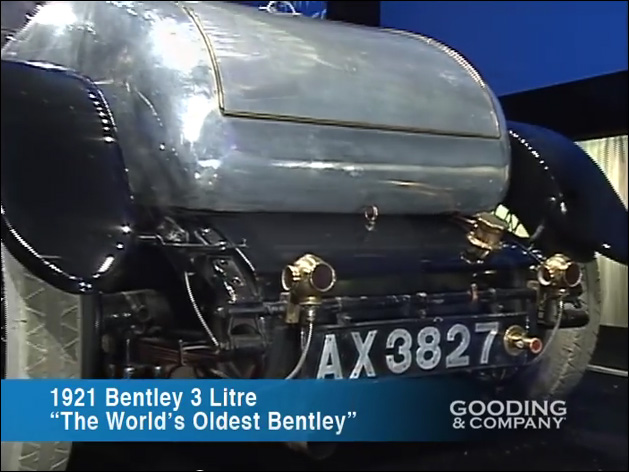

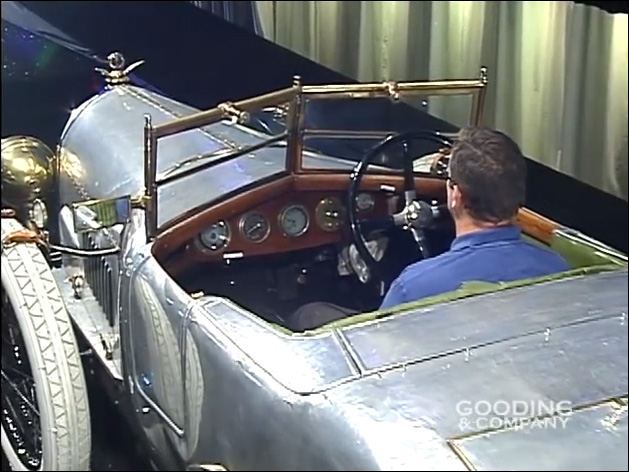
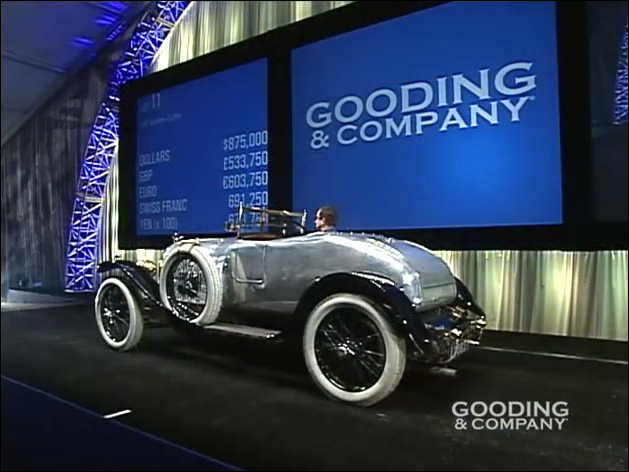
Chassis number 3 is an extraordinary, 'matching-numbers' car with original aluminium coachwork and brass brightwork. The marque's signature craftsmanship and engineering capabilities, introduced by company founder W.O. Bentley, are evident even in this oldest surviving production 3 Litre.
The true test of the engineering of the 3 Litre came with wins at the 24 Hours of Le Mans endurance race in 1924 and 1927, the start of an epic run of five Bentley victories in eight years. The legend had been born in a successful albeit short period since the founding of Bentley in 1919 and this sporting heritage remains at the heart of all Bentley models today.
Thurston Twigg-Smith Jr., former owner of this car, has pointed out the following with reference to the text above: "Noel Van Raalte bought Chassis 1, NOT Chassis 3. Ivor Llewellyn was first owner of chassis 3, which was the first car delivered."
Source: Bentley Media, YouTube video
Posted: Aug 23, 2011
July 31, 2011
Click on thumbnail for larger view
Source: AutoWeek, July 11, 2011
Posted: Jul 12, 2011
July 31, 2011
Click on thumbnail for larger view

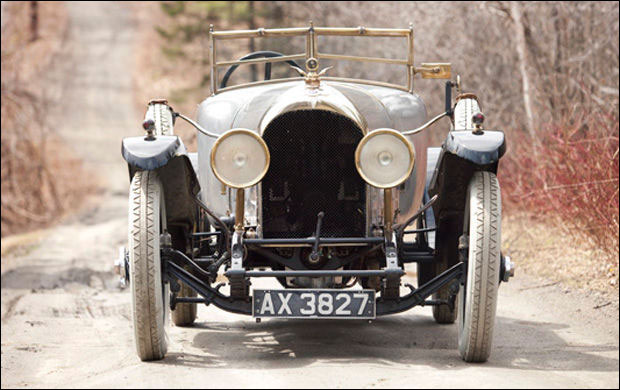
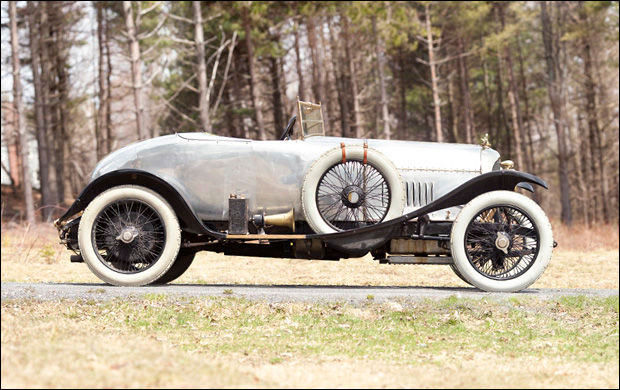
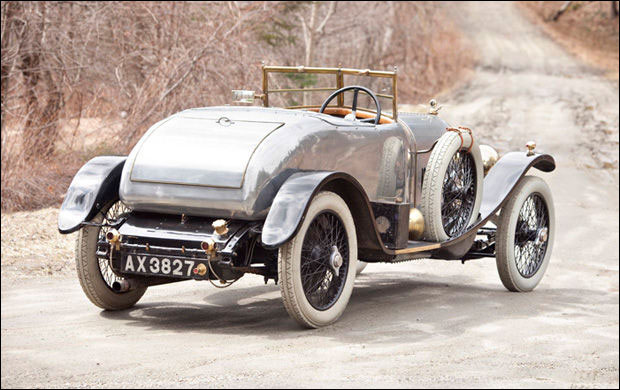
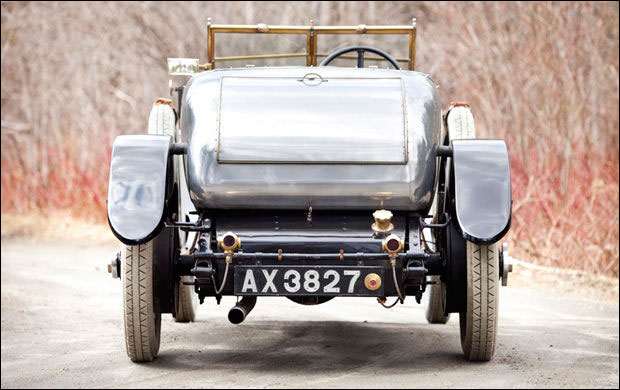

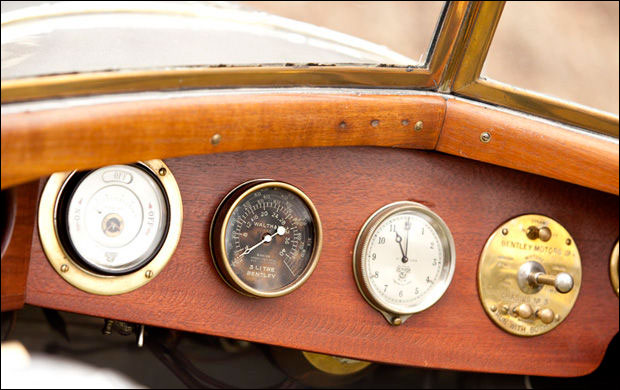
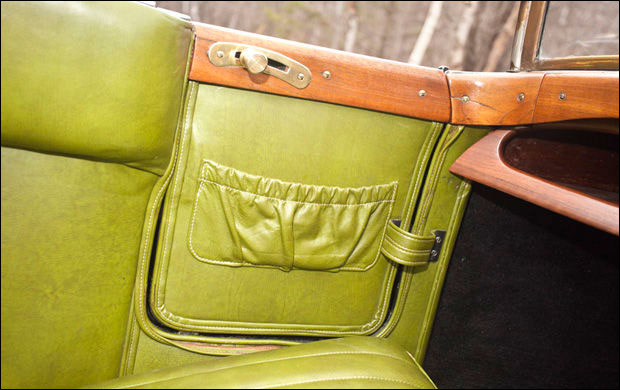


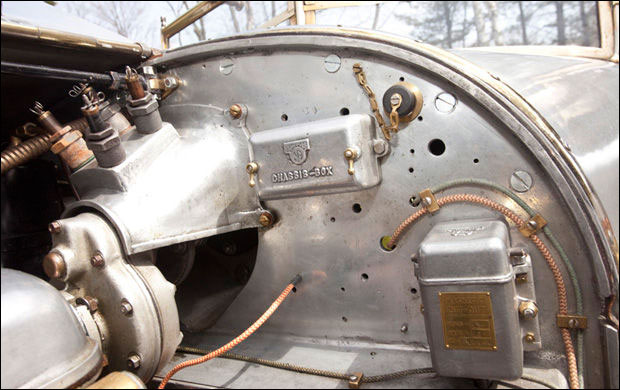
1921 Bentley 3 Litre
Coachwork by R. Harrison & Son, Ltd.
Chassis No. 3
Engine No. 4
UK Registration No. AX 3827
- The First Production Bentley Delivered
- A Matching-Numbers, Original-Bodied Example
- Documented Ownership from New
- Correct Components Throughout
- A Driving Event Veteran
- One of the Most Important Bentleys in Existence
- 2,996 CC SOHC Inline 4-Cylinder Engine
- Smiths 45VS Carburetor
- 70 HP
- 4-Speed Manual Non-Synchromesh “A” Gearbox
- 2-Wheel Rear Drum Brakes
- Live-Axle Suspension with Semi-Elliptical Leaf Springs
In the fledgling years of Bentley’s early beginnings, the need to produce and sell “customer” cars was of the greatest importance. As early chassis and engines were completed, the finished cars were immediately sent to coachbuilders for order fulfillment. The first Bentley to be delivered was this very 3 Litre, Chassis 3, carrying engine 4. On August 3, 1921, Bentley handed over the first customer car to Ivor Llewelyn of Blaen-y-Pant, Malpas near Newport, Monmouthshire, in Wales.
Mr. Llewelyn represented the ideal Bentley client. He was often seen and photographed at the wheel of his Silver Ghost while the chauffer occupied the rear seat. He became an enthusiastic customer and purchased two more 3 Litres, Chassis 48 and Chassis 912, and enjoyed ownership of Chassis 3 for seven years. Bentley valued Mr. Llewelyn for his status as their first paying customer who, upon seeing Exp 2 at the Olympia show, had eagerly placed his order for the new British-built sporting car. Interestingly, the sale of the car to Mr. Llewelyn was kept private as it was necessary for Bentley to publicly deliver the “first” car, Chassis 1, to KLG financier Noel van Raalte, a transaction that took place a full month after the delivery of Chassis 3.
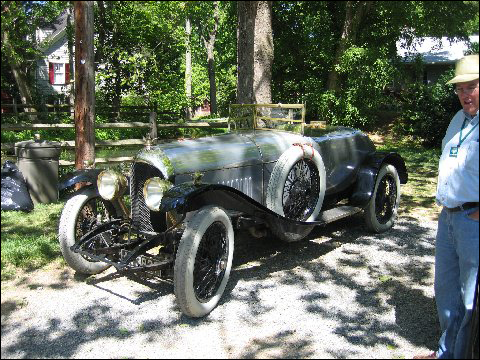
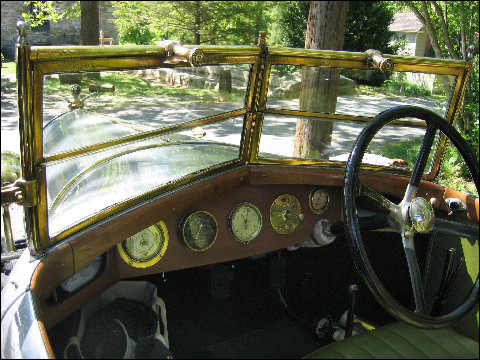
The early completion of Chassis 3 is thought to be an outcome of the simplistic finishing of the coachwork. As specified for Mr. Llewelyn, the body of Chassis 3 is a very Edwardian yet sporting “canoe stern” two-seater. The aluminum coachwork was left unpainted, “scratched” and varnished, producing an interesting metallic wood-grain appearance. The brightwork on the car was brass and the original interior was believed to be non-pleated black leather. The proportions of the car are striking and the height of the body is enveloping and sporting. It is notable that, for such an early car, the brake lever remains within the coachwork, the windscreen is both raked and vee’d and, more astonishingly, the top is fully disappearing – a very advanced feature for 1921. Although there are no records or badging of a coachbuilder on Chassis 3, the work is believed to be that of R. Harrison & Son, Ltd. whose marking can be found cast on the windshield locking nuts.
In late 1921, soon after delivery and at the urging of Mr. Llewelyn’s wife, the rear of the body was slightly altered to accommodate a dickey seat. The work was done in steel and the car was subsequently painted in grey with the wings and wheels finished in Claret. Mr. Llewelyn’s son, Desmond Llewelyn, the famed actor known as “Q” from the James Bond movie series, recalled his father’s immediate changes to the car. The first registration, dating November 17, 1921, notes the new finish as “Primrose and Sand.”
In 1928, after a lengthy first ownership, Chassis 3 was sold to Christopher J. Griffiths, also of Newport, Monmouthshire. The car remained in factory service records through 1931. On March 23, 1933, the logbook notes a transfer of ownership to Earnest “Cracky” Williams of Bristol, England. The Bentley remained with Mr. Williams through the war in the company of what was said to be “numerable interesting cars,” the care of which was less than satisfactory. However, Chassis 3 did have the “luxury” of a groundsheet cover and was believed to be in very original condition during that time.
In 1946, John Frank Saunders, an engineer with Bristol Aeroplane Company, purchased the Bentley from Mr. Williams. Mr. Saunders began the task of bringing Chassis 3 back to the road and, at that time, the car received a new front axle with front brakes. However, Mr. Saunders’ ownership was short and, after just three years, the car passed to Duncan Beaton for the sum of £120. Mr. Beaton recalls the effort of the negotiation from the asking price of £125 as “costing £4 in beer, at 10 pence a pint.” Mr. Beaton went on to recollect that it was “a wonderful bargain because every trip [in Chassis 3] was joyful.”
Mr. Beaton owned the car for just two years but used it frequently. A series of black-and-white photos show Mr. Beaton and Mr. Saunders using the car at a club event at Naish Hill. During that ownership, the car also found use on a rather damp tour of Wales with Mr. Beaton and his mother, who, in proper Bentley fashion, never once used the top.
In 1951, Mr. Beaton regretfully traded Chassis 3 to Frank Walker of the Highland Square Garage off Blackboy Hill in Bristol, in part ex- change for a 6C 1500 Alfa Romeo. Mr. Walker sold the car to Stephen James that same year. The Bentley was seen on display shortly after at a Bentley Drivers Club event with the Royal Air Force “Battle of Britain at Home Day” air display at the Filton Aerodrome in Bristol. Chassis 3 was the cornerstone of a 12-car display featuring one of each model Vintage Bentley.
In 1954, Chassis 3 was sold to Samuel Rex Purkiss who kept the car for two years. During Purkiss’ ownership, his inquiry of early delivery dates prompted the Bentley Drivers Club (BDC) to acknowledge Chassis 3 as the oldest Bentley known to exist and, since then, the club record card has indicated that it is “The first production Bentley to be sold to a customer.”
Chassis 3 eventually left the Bristol area when Robert Eugene Tait of London purchased the car. After some minimal restoration, Chassis 3 ap- peared at Kensington Gardens and other BDC events where it received considerable attention. Mr. Tait sold the Bentley to John S. Riggs of New York. On November 28, 1957, Chassis 3 left the UK for the first time aboard the S.S. American Farmer en route to New York.
It is said that Riggs drove Chassis 3 the 350 miles from the harbor to his home in Elmira, New York, without a problem. Mr. Riggs was an active collector in the 1940s and 1950s. Various club records show his interest in, and ownership of, Brass, Nickel and Classic Era cars of both American and European manufacture. Mr. Riggs listed Chassis 3 for sale in a 1959 issue of the Flying Lady and, although he noted the need for restoration of the coachwork, the car was listed at $2,500 when the most expensive 8 Litre in the same issue was no more than $1,500.
In 1961, the car was sold to Gordon C. Morris in Maryland, New York. Little is known of Mr. Morris’ ownership of the car and, after five years, it was purchased by Ed Jurist of the Vintage Car Store, also in New York. That same year, Robert McKee of New Jersey bought the car. During McKee’s five-year ownership, a lengthy article on the history of Chassis 3 by Tony Stamer was featured in the BDC Review. In 1971, the car was bought by a partnership and subsequently sold to Breene Kerr and William E. Howell in Oklahoma City, Oklahoma.
Upon receipt of the car, Mr. Kerr and Mr. Howell began restoring Chassis 3 but ultimately abandoned the project after several years. Correspondence and photos document the process from 1971 to 1976 when the work ceased. Photos from 1976 show the car in a relatively complete and assembled state, and clearly show the two major changes Mr. Kerr undertook, the first of which was the placement of louvres in the bonnet followed by the replacement of the steel tail with aluminum. It was Kerr’s desire to leave the coachwork in polished aluminum and, in order to do so, the 1921 changes for the dickey seat were replicated in aluminum.
Chassis 3 remained with Mr. Kerr until 1985 when George Schuetz of Woodstock, Vermont, purchased the car for $50,000. When it arrived at Schuetz’s shop “Cricklewood,” a thorough assessment was undertaken with the help of fellow enthusiasts Len Wilton and Ed Downey. Work began again on Chassis 3 but was never completed.
In July 1994, the current owner purchased Chassis 3 in an unfinished and disassembled state. However, Chassis 3 held the promise of a complete and significant Bentley. Having known the car for some time, the owner, a true Bentley enthusiast, was anxious to bring Chassis 3 back to driving condition, although it became apparent that it was to be a lengthy process. In a very methodical and purposeful manner, significant research was done on the history of Chassis 3 as well as on the details of early 3 Litres. The car was once again assessed from the perspective of completeness and correctness, any issues were noted and any missing parts were sourced. In conjunction with the ongoing research, a labor-intensive disassembly initiated a well- documented and sympathetic rebuild of the car.
In September 1999, Chassis 3 proudly returned to the road for the first time in approximately 30 years, appearing with a delightful patina and a wonderful exhaust note appropriate of such an important Bentley.
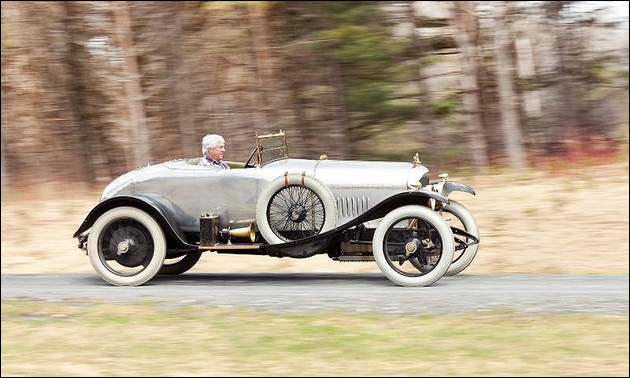
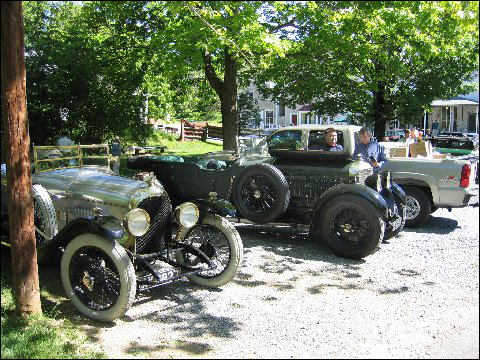
In its current state, Chassis 3 is simply unique with polished aluminum coachwork, black wings and beaded-edge wheels. The unrestored brass plating complements the medium green interior imbuing the Bentley with irresistible charm. Upon closer inspection, each detail specific to these very early cars can intrigue even the most knowledgeable Bentley enthusiasts. All major components except the front axle, which was replaced by the brakeless unit from Chassis 261, are original. Attesting to its mechanical condition and usability since completion, Chassis 3 has participated in many events and Vintage Bentley rallies.
Chassis 3 is undoubtedly one of the most significant Bentleys in the world. Originality and matching numbers are extremely scarce with this marque – so it is remarkably fortunate that Chassis 3, the first production Bentley delivered, still possesses its original body and matching-numbers engine and gearbox. In original form, there is no older or more important Bentley 3 Litre.
Source: Gooding & Company
Posted: Aug 23, 2011
May 31, 2011
Click on thumbnail for larger view

One of the most important Bentleys in existence, this 1921 Bentley 3 Litre was the first customer car to leave the Bentley factory. Chassis 3 is an extraordinary, matching-numbers car with brass brightwork and an original aluminum body with fully disappearing top as specified by the first owner. It’s participation in Vintage Bentley rallies, and many other recent events, attests to the car’s usability. Chassis 3 is a special addition to Gooding & Company’s Pebble Beach Auctions this August, and its estimate is available on request.
Coachwork by R. Harrison & Son, Ltd.
- The First Production Bentley Delivered
- A Matching-Numbers, Original-Bodied Example
- Documented Ownership from New
- Correct Components Throughout
- A Driving Event Veteran
- One of the Most Important Bentleys in Existence
- 2,996 CC SOHC Inline 4-Cylinder Engine
- Smiths 45VS Carburetor
- 70 HP
- 4-Speed Manual Non-Synchromesh “A” Gearbox
- 2-Wheel Rear Drum Brakes
- Live-Axle Suspension with Semi-Elliptical Leaf Springs
Source: Gooding & Company
Posted: Jun 28, 2011
February 28, 2010
Source: Thurston Twigg-Smith Jr. (Owner)
Posted: Mar 9, 2010
June 30, 2009
Source: Thurston Twigg-Smith Jr. (Owner)
Posted: Jul 7, 2009
2006
Posted: Jan 1, 0001
2006
Click on thumbnail for larger view
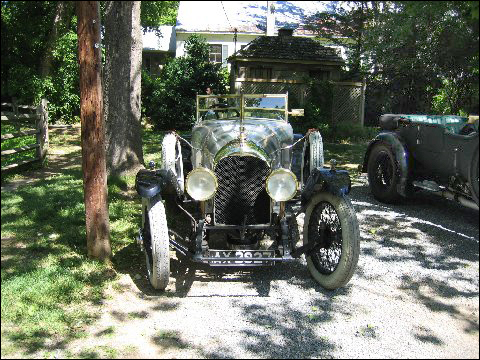

Source: Matt Sysak
Posted: Dec 13, 2008
1994
Source: Thurston Twigg-Smith Jr. (Owner)
Posted: Jul 9, 2007
Click on thumbnail for larger view

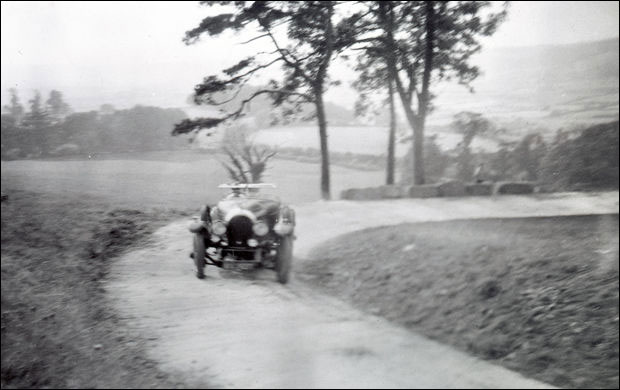


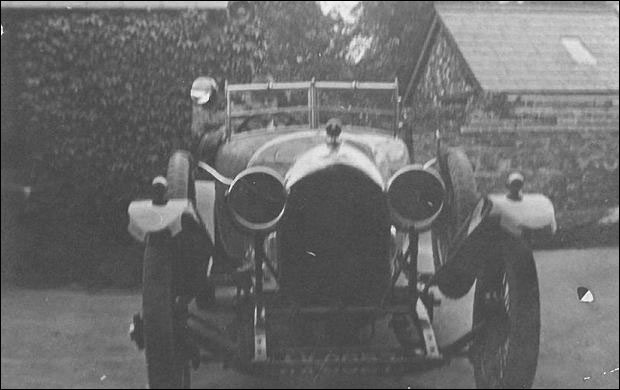
Source: Gooding & Company
Posted: Aug 23, 2011
Click on thumbnail for larger view
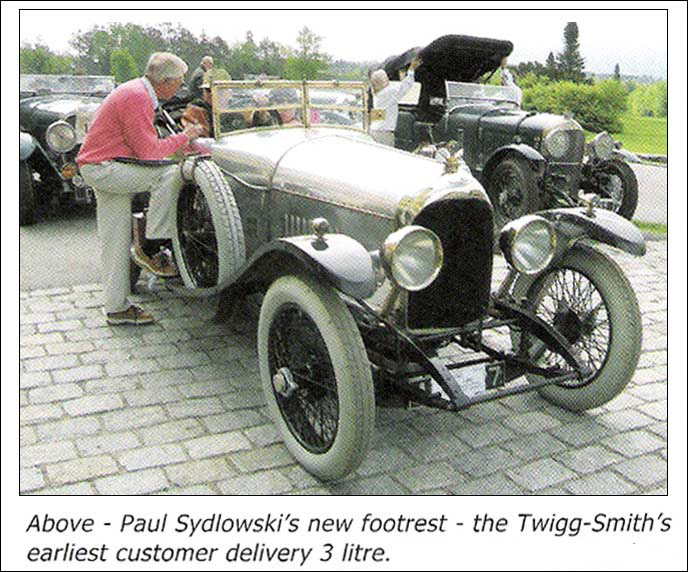
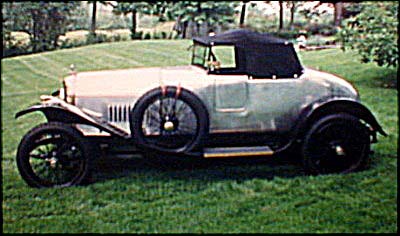
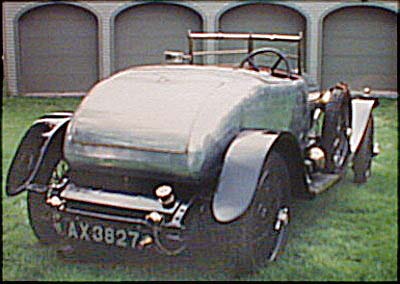
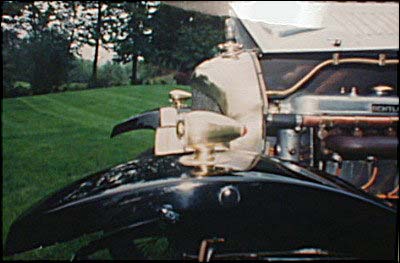

Source: A BDC member
Posted: Jan 24, 2006
Van Raalte's "sale" was clearly arranged for publicity — he was principle in the K.L.G. spark plug company, which most early 3 litres were supplied with, and a playboy race driver of some merit.
Chassis #3 still exists with its original body, and still runs on K.L.G. K-1 plugs. It's here in Vermont in my barn."
~~~
"Chassis 3 originally had Lucas lamps on stirrup stanchions as did EXP3. I have a set of lamps, just need to replicate the posts and braces. Fortunately I have two photos of the car as delivered with its first owner behind the wheel to substantiate the light setup. A few more details and the car will be as near to "as delivered" as this human can make it!"
Source: Thurston Twigg-Smith Jr. (Owner)
Posted: Jul 7, 2009
Click on thumbnail for larger view
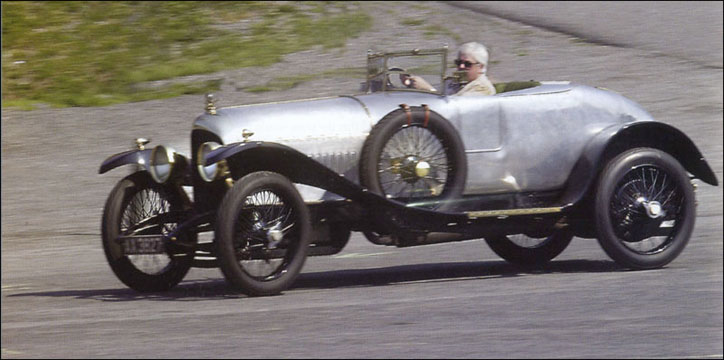
Source: Unknown (2003)
Posted: Sep 21, 2006
Earliest Record Of Historical Facts & Information
| Chassis No. | 3 |
|---|---|
| Engine No. | 4 |
| Registration No. | AX 3827 |
| Date of Delivery: | 31 Jul 1921 |
| Type of Body: | 2-seater |
| Coachbuilder: | No info |
| Type of Car: | S |
| First Owner: | LLEWELLYN IVOR |
| More Info: | "Body by R. E. Harrison & Son, Ltd. is original, as is 95% of the car. Brakeless front axle is from Chassis 261. Reconditioned by current owner, who bought it in 1994 as a non-running, partially assembled rolling chassis, body mounted — and lots of boxes and buckets of parts. Running since 1998, first time since the sixties. Historically correct, even to original K-1 spark plugs." Source: Thurston Twigg-Smith, Jr., Owner — July 09, 2007 (Thurston Twigg-Smith, Jr. bought this car in 1994) "Coachbuilder of original body still fitted has been determined to be R Harrison & Sons, as was EXP3." Source: Thurston Twigg-Smith, Jr., Owner — March 8, 2010 Michael Hay, in his book Bentley: The Vintage Years, 1997, states: "In USA. Original 2 seater modified to 2 seater and dickey. One SU on special manifold now twin SUs. Was fitted four wheel hydraulic brakes - brakeless front axle to be fitted." |