
Vintage Bentley
Production NOS.
Where To Look For
Chassis & Engine NOS.
Bentley Specials & Special Bentleys
Unidentified
Bentleys
Articles
21 January 2015
The Story of the First 24 Hours of Le Mans in 1923
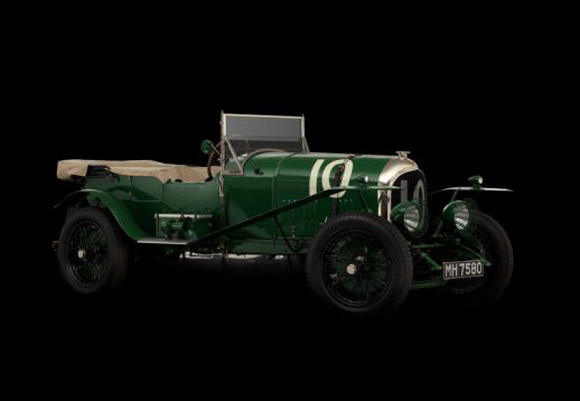
The year 2013 was the 90th anniversary of the very first 24 Hours of Le Mans. At 4 PM on May 26, 1923, shortly after the onset of a rain shower, the starter's flag fell. And as the assembled cars — of which only one, a Bentley 3.0 Sport, wasn't built in France — scrabbled away on the roughly surfaced road, the rain turned to hail.
 James Mann / Art of the Le Mans Race Car |
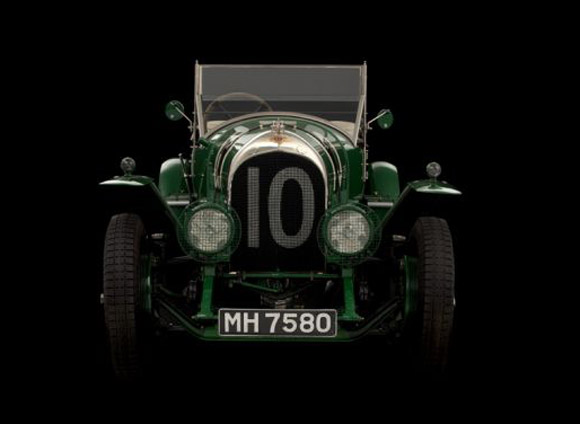
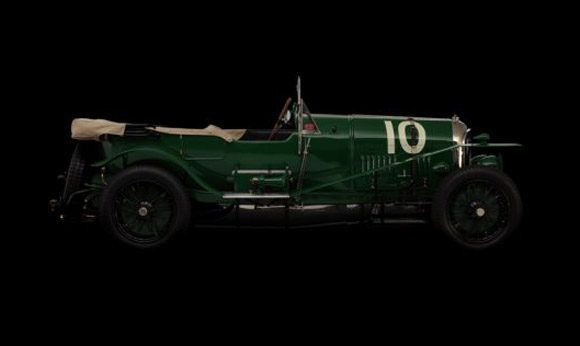
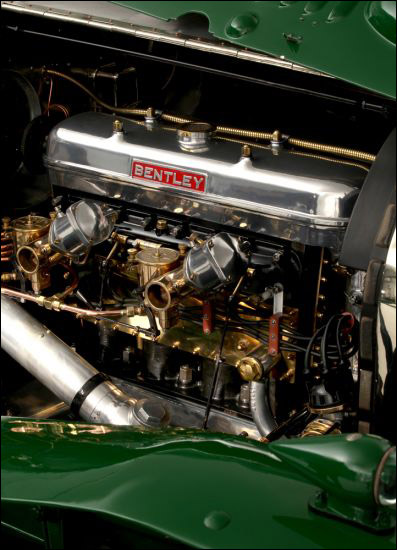
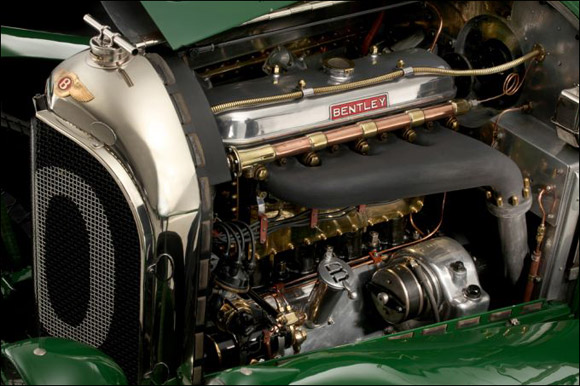
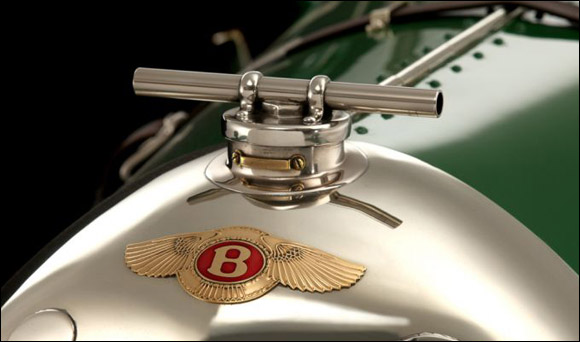
This year (2013) was the 90th anniversary of the very first 24 Hours of Le Mans. At 4 PM on May 26, 1923, shortly after the onset of a rain shower, the starter's flag fell. And as the assembled cars — of which only one, a Bentley 3.0 Sport like the one photographed here, wasn't built in France — scrabbled away on the roughly surfaced road, the rain turned to hail.
 James Mann / Art of the Le Mans Race Car |
The inaugural enduro at Le Mans was billed as the first of three trials for the Rudge-Whitworth Cup, the idea being that after three years of competition, the winner would be decided at a final run-off. The concept would not see the end of the decade and its description in The Autocar gives some idea as to why it didn't find traction:
|
|||||||||||
It was the entrants who, in effect, blew a raspberry at the idea that this would be a sedate reliability trial. As The Autocar's correspondent noted, approvingly:
|
|||||||||||
 James Mann / Art of the Le Mans Race Car |
Heavy rain made the
1923 Le Mans 24 Hours a miserable experience for all
concerned — none more than Bentley drivers John
Duff and Frank Clement, who raced without helmets or
goggles throughout.
Duff, born in China to Canadian parents, was a colourful
character who had, amongst other racing activities,
acquired a 1908 Fiat Grand Prix car which he had campaigned
at Brooklands until its engine blew in half. Having
disposed of the Fiat's remnants (to a fellow racer who
would rebuild it with a 22-litre aircraft engine…)
in 1922, Duff set his sights on the newly announced
24-hour race at Le Mans and entered a Bentley 3.0 Sport
under his own name for the first edition of the vingt-quatre
heures.
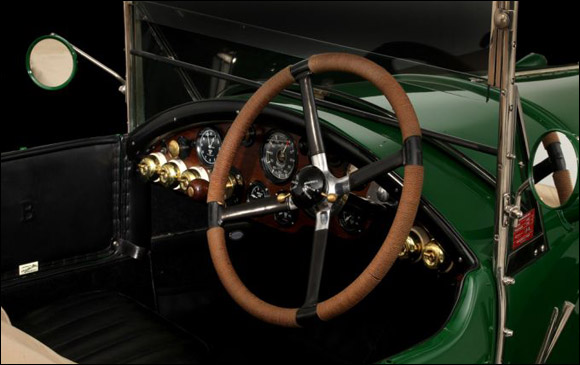
In this enterprise he would be partnered by Bentley
test driver Frank Clement, who duly gave the car its
first test run along the company's preferred route:
out of the workshop and north up the A5 towards Stanmore,
where Brockley Hill stood as a test of each Bentley's
ability to accelerate under load.
 James Mann / Art of the Le Mans Race Car |
W.O. Bentley himself?
He thought the race was a terrible idea, and only revised
his opinion after witnessing his car giving ‘em
what for.
Duff and Clement kept the leading Chennard et Walcker
cars honest in the opening hours, but as darkness fell
a stone penetrated one of their headlights. Chennard
et Walcker offered to give them a spare, but Duff and
Clement elected to continue, reasoning that they would
lose more time in stopping to change the light —
with only one person allowed to work on the car at a
time — than they would in muddling along with the
holed one working intermittently. By dawn, the Bentley
was two laps down on the leader.
Duff took the wheel at 9 AM and set lap record after
lap record in pursuit of the two cars ahead, but shortly
before midday the Bentley sputtered to a halt. A stone
had holed its fuel tank. Duff made best speed on foot
back to the pits—a distance of three miles —
while the stewards determined that Clement could borrow
a bicycle to pedal back to the stranded car with what
petrol he could carry once Duff had arrived. This he
did, thoughtfully slinging the bicycle into the back
of the Bentley so it could be reunited with its owner
once he brought the car in.
 James Mann / Art of the Le Mans Race Car |
Repairs cost over two
hours, and while Clement broke the lap record once he
returned to the course, there would be no catching the
leaders. Bentley would have to settle for fourth place.
Shifting the date to June for 1924 delivered better
weather. Bentley won, but then in 1925 fell foul of
a rule change which dictated that all cars had to run
with their soft-tops erected until the first fuel stop,
a minimum of 20 laps. Bentley hadn't calculated the
effect this would have on fuel consumption. The car
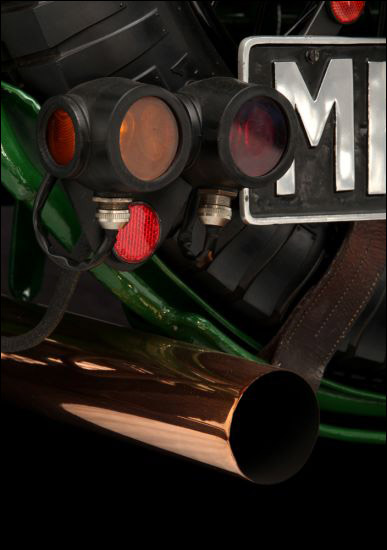
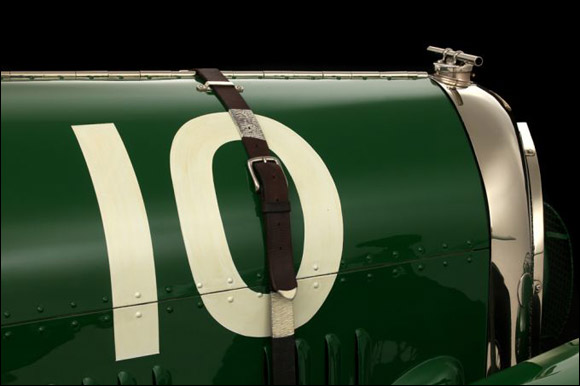
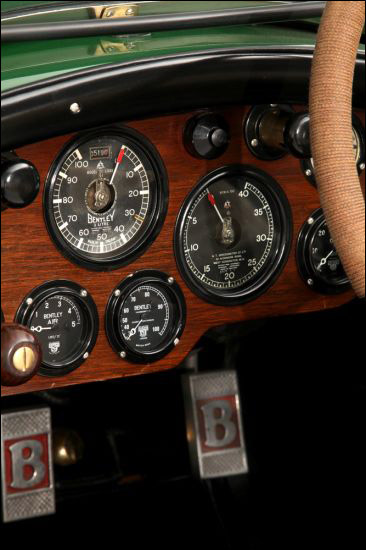
photographed here (well, most of it — few cars
of the period are fully original this long after the
fact) stopped at the Pontlieue hairpin, out of fuel.
Bentley went on to dominate the race in the second half
of the decade, breaking the domestic monopoly on the
entry and setting the annual enduro on its way to legendary
status.
 James Mann / Art of the Le Mans Race Car |
 James Mann / Art of the Le Mans Race Car |
 James Mann / Art of the Le Mans Race Car |
 James Mann / Art of the Le Mans Race Car |
 James Mann / Art of the Le Mans Race Car |
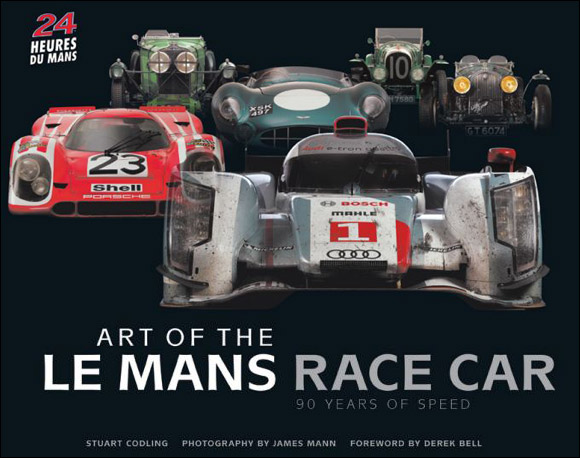 Motorbooks, 2013 Art of the Le Mans Race Car: 90 Years of Speed by Stuart Codling with Photography by James Mann |
Posted here on Jan 21, 2015